

Lemang

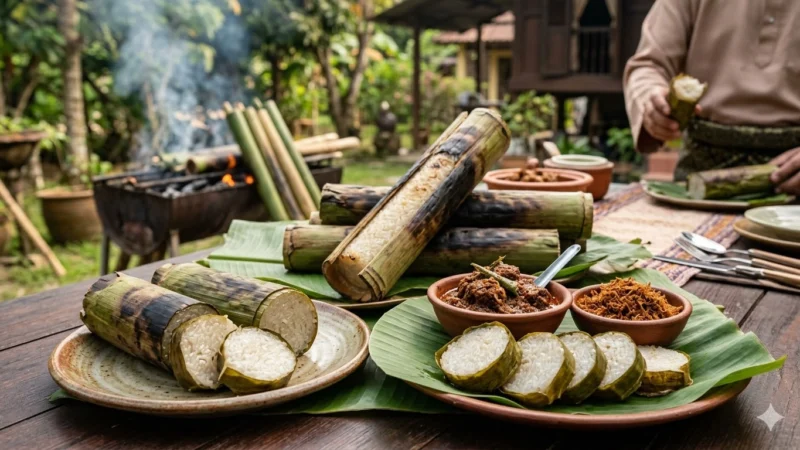
Introduction
Lemang is one of the most beloved traditional foods in Malaysia and an essential dish during festive celebrations, particularly Hari Raya Aidilfitri. This unique delicacy is made by cooking glutinous rice with coconut milk inside bamboo tubes lined with banana leaves and roasting them slowly over an open fire. The method gives lemang its distinctive smoky aroma and creamy texture.
Popular across Malaysia, Indonesia, and Brunei, lemang represents the rich culinary heritage of the Malay world. It is typically served with flavorful dishes such as rendang, serunding, or sambal, making it a highlight of festive dining and family gatherings.
Origin and Regional Cuisine
Lemang originates from the Malay and Minangkabau communities of Southeast Asia. The cooking technique of using bamboo over an open fire was historically practiced by indigenous communities in forested regions.
In Malaysia, lemang is especially popular in states such as Kelantan, Terengganu, Pahang, and Negeri Sembilan, although it is widely enjoyed throughout the country. The dish has become strongly associated with Hari Raya celebrations, where families and neighbors gather to prepare lemang together.
Category
| Attribute | Details |
|---|---|
| Food Name | Lemang |
| Category | Traditional rice dish |
| Cuisine | Malay / Southeast Asian |
| Cooking Method | Bamboo roasting |
| Common Pairings | Rendang, serunding, sambal |
| Occasions | Hari Raya, weddings, cultural festivals |
Appearance
Lemang has a cylindrical shape that reflects the bamboo tube used during cooking. After roasting, the bamboo is split open and the rice is removed together with the banana leaf lining.
The rice forms a firm roll that is sliced into thick pieces. Its interior is creamy white and slightly glossy, while the outer layer may have a light golden tint from roasting.
Ingredients
The traditional ingredients used to prepare lemang are simple but flavorful:
- Glutinous rice (pulut)
- Coconut milk
- Salt
- Banana leaves
- Bamboo tubes
The coconut milk provides richness and aroma, while the banana leaves prevent sticking and contribute to the dish’s earthy fragrance.
Preparation
Preparing lemang is a traditional cooking process that requires patience and careful attention.
- Wash and soak the glutinous rice for several hours.
- Line bamboo tubes with banana leaves.
- Fill the tubes with soaked rice and coconut milk mixture.
- Arrange the bamboo tubes at an angle near an open wood fire.
- Roast slowly for 3 to 5 hours, turning occasionally for even cooking.
This slow-roasting process allows the rice to absorb the coconut milk fully while developing a gentle smoky flavor.
Equipment
Traditional lemang preparation uses simple tools:
- Fresh bamboo tubes
- Banana leaves
- Wood fire or charcoal pit
- Large bowls for mixing rice and coconut milk
- Wooden sticks or supports for leaning bamboo tubes
Although modern kitchens may use ovens or metal molds, the authentic bamboo method remains the most popular for its unique flavor.
Taste
Lemang has a rich, creamy, and mildly savory taste. The coconut milk gives the rice a slightly sweet flavor, while the bamboo roasting process adds a subtle smoky note.
When paired with spicy dishes such as rendang, the mild flavor of lemang balances the strong spices beautifully.
Texture
The texture of lemang is soft, dense, and slightly sticky, thanks to the glutinous rice. Despite its firmness, it remains moist and tender when sliced.
Aroma
Lemang is well known for its warm, fragrant aroma created by the combination of coconut milk, banana leaves, and bamboo roasting. The smell of lemang cooking over open fires is often associated with festive preparations in Malaysian villages.
Cultural Significance
Lemang plays an important role in Malaysian culture, particularly during Hari Raya Aidilfitri, the celebration marking the end of Ramadan.
Families often prepare lemang together the day before the festival. In many towns and villages, roadside stalls selling freshly roasted lemang become a common sight during the festive season.
The preparation process itself is often a social activity that strengthens community bonds.
Symbolism
Lemang symbolizes several cultural values in Malay society:
- Community and cooperation, as people gather to prepare it together
- Hospitality, as it is served to guests during festive visits
- Tradition, representing ancestral cooking techniques passed down through generations
Social Context
Lemang is commonly served during:
- Hari Raya Aidilfitri celebrations
- Hari Raya Aidiladha
- Weddings and family gatherings
- Village festivals and cultural events
It is typically enjoyed with dishes such as rendang or serunding, creating a rich and satisfying festive meal.
Nutritional Information and Health Benefits
Lemang provides a good source of energy due to its carbohydrate-rich glutinous rice.
Nutritional highlights include:
- High in carbohydrates for energy
- Contains healthy fats from coconut milk
- Naturally gluten-free
- Provides moderate amounts of minerals from coconut
However, because coconut milk is high in fat, lemang is best enjoyed in moderation.
Dietary Restrictions and Allergens
Lemang generally fits several dietary preferences:
- Gluten-free: Yes
- Vegetarian: Yes (when served without meat dishes)
- Vegan: Yes (if paired with plant-based sides)
The main potential allergen is coconut, which some individuals may be sensitive to.
Cost and Availability
Lemang is widely available across Malaysia, particularly during festive seasons.
Typical price range:
- RM15 to RM25 per bamboo tube, depending on size and location.
You can usually find lemang at:
- Ramadan bazaars
- roadside festive stalls
- traditional Malay restaurants
- night markets
Outside the festive season, lemang may still be available at specialty food stalls or cultural events.
The Key Components of Nasi Kerabu
Cultural Significance and Popularity
Nasi Kerabu is a famous traditional dish from Kelantan, located on Malaysia’s east coast. The dish is best known for its vibrant blue rice, which is naturally colored using butterfly pea flowers.
The meal combines rice with fresh herbs, vegetables, salted egg, fish, and spicy condiments such as budu (fermented fish sauce). Its colorful appearance and complex flavors make it one of Malaysia’s most recognizable regional dishes.
Today, Nasi Kerabu is widely enjoyed throughout Malaysia and is popular among both locals and international visitors exploring Malaysian cuisine.
How to Prepare Nasi Kerabu
Ingredients
For the rice:
- 2 cups white rice
- Butterfly pea flowers
- Salt
For toppings:
- Grilled fish or fried chicken
- Salted egg
- Fresh herbs (mint, daun kesum)
- Bean sprouts
- Shredded coconut (kerisik)
- Sambal or budu
Direction
- Boil butterfly pea flowers to create natural blue-colored water.
- Cook rice using this water to produce blue rice.
- Grill fish or prepare protein toppings.
- Place rice on a plate and arrange herbs and vegetables around it.
- Add salted egg and sprinkle kerisik.
- Drizzle with sambal or budu before serving.
Notes
- Fresh herbs are essential for authentic flavor.
- Budu adds the traditional salty umami taste.
- Some modern variations include fried chicken or beef rendang.

- Temperature
- Precipitation
- Rain Chance
- Wind
- Humidity
- Pressure


FAQ – Lemang
What is lemang made of?
Lemang is made from glutinous rice, coconut milk, and salt cooked inside bamboo tubes lined with banana leaves.
Why is lemang cooked in bamboo?
Cooking in bamboo allows slow roasting and adds a unique smoky aroma to the rice.
What dishes are commonly served with lemang?
Lemang is typically served with rendang, serunding, or sambal.
Is lemang only eaten during festivals?
Although it can be eaten anytime, lemang is most commonly enjoyed during Hari Raya celebrations.
Is lemang sweet or savory?
Lemang has a mild coconut flavor that leans slightly savory and pairs well with spicy dishes.












Comments are closed.