

Ketupat

Introduction
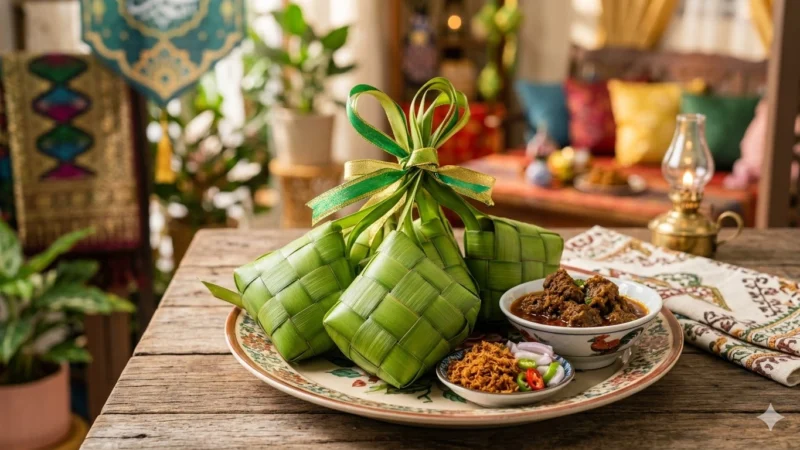
Ketupat is one of the most iconic traditional foods in Malaysia and across Southeast Asia. This unique rice dumpling is prepared by cooking rice inside a beautifully woven pouch made from young coconut palm leaves. The result is a firm, compact rice cake with a distinctive diamond shape that has become strongly associated with festive celebrations.
In Malaysia, ketupat is especially popular during Hari Raya Aidilfitri, marking the end of the fasting month of Ramadan. Families prepare large batches of ketupat to serve alongside rich dishes such as rendang, satay, and peanut sauce. Beyond its delicious taste, ketupat carries deep cultural symbolism related to forgiveness, unity, and gratitude.
Origin and Regional Cuisine
Ketupat originates from traditional Malay and Javanese culinary cultures and is widely consumed in Malaysia, Indonesia, Brunei, and Singapore. Historical records suggest that ketupat has been part of Southeast Asian cuisine for centuries, particularly in Muslim communities celebrating festive occasions.
Different regions have developed their own variations:
- Ketupat Nasi – Made with regular white rice in woven palm leaves.
- Ketupat Palas – Prepared with glutinous rice and wrapped in fan palm leaves.
- Lontong – Similar compressed rice cake wrapped in banana leaves.
Today, ketupat remains an essential dish during Hari Raya celebrations and is commonly served during communal feasts and open houses.
Category
- Food Type: Rice-based dish
- Cuisine: Malay / Southeast Asian
- Dish Category: Staple food or side dish
- Occasion: Festive celebrations such as Hari Raya Aidilfitri
Ketupat is rarely eaten alone and is usually served with savory dishes.
Appearance
Ketupat is easily recognizable by its diamond-shaped casing made from woven coconut palm leaves. The weaving pattern is both decorative and practical, allowing the rice to expand while cooking.
After boiling, the palm leaves turn a deeper green color while the rice inside becomes a firm white rice cake. When the casing is cut open, the rice can be sliced into neat cubes or blocks.
Ingredients
Ketupat is known for its simplicity, requiring only a few ingredients:
- White rice
- Young coconut palm leaves (for weaving the pouch)
- Water
- Salt (optional)
Despite the minimal ingredients, the traditional weaving technique gives ketupat its distinctive character.
Preparation
Preparing ketupat involves a unique traditional process:
- Weaving the pouch
Fresh palm leaves are woven into a small diamond-shaped casing. - Filling with rice
The pouch is filled halfway with uncooked rice to allow space for expansion. - Boiling
The filled pouches are boiled in water for approximately 2 to 3 hours. - Cooling and draining
Once cooked, the ketupat is hung to drain excess water and cool.
During cooking, the rice expands and compresses inside the pouch, forming a dense rice cake.
Equipment
Traditional ketupat preparation requires only basic kitchen tools:
- Large cooking pot
- Stove
- Knife
- Palm leaves for weaving
- Hooks or strings for hanging and draining
In modern kitchens, some households use pre-made ketupat casings for convenience.
Taste
Ketupat has a mild and neutral rice flavor, making it the perfect accompaniment to rich and spicy dishes. Its subtle taste helps balance strong flavors such as chili-based sambal or aromatic curries.
Texture
The texture of ketupat is distinctive compared to regular steamed rice. It is:
- Firm
- Compact
- Slightly chewy
The compression during cooking gives ketupat its dense structure, allowing it to be easily sliced.
Aroma
Ketupat has a light, natural rice aroma combined with a subtle fragrance from the coconut palm leaves used in the casing. This gives the rice cake a fresh and earthy scent.
Cultural Significance
Ketupat holds an important place in Malay culture and traditions. During Hari Raya Aidilfitri, families prepare ketupat as part of festive meals shared with relatives and guests.
The dish is also a symbol of hospitality. Many households serve ketupat during open house gatherings where visitors are welcomed with generous food and warm greetings.
The weaving of ketupat casings is a traditional skill often passed down from older generations to younger family members.
Symbolism
Ketupat is rich in cultural symbolism. In many Malay traditions, it represents:
- Forgiveness and reconciliation after Ramadan
- Purity and renewal
- Unity within the community
The woven palm leaf casing is sometimes interpreted as representing the complexity of human mistakes, while the pure white rice inside symbolizes forgiveness and sincerity.
Social Context
Ketupat is closely linked with communal dining and festive gatherings. It is commonly served during:
- Hari Raya celebrations
- Family feasts
- Community events
- Cultural festivals
Sharing ketupat meals strengthens social bonds and reflects the spirit of togetherness that defines Malaysian hospitality.
Nutritional Information and Health Benefits
Ketupat is primarily a carbohydrate-based food that provides energy.
Approximate nutrition per serving:
- Calories: 160–180 kcal
- Carbohydrates: High
- Fat: Very low
- Protein: Low
Health Benefits
- Good source of energy
- Naturally gluten-free
- Low in fat
However, the overall calorie content may increase when eaten with rich dishes like rendang or peanut sauce.
Dietary Restrictions and Allergens
Ketupat itself is suitable for many dietary preferences:
- Vegetarian-friendly
- Vegan-friendly
- Gluten-free
- Halal
Any dietary concerns usually come from the dishes served alongside ketupat rather than the rice cake itself.
Cost and Availability
Ketupat is affordable and widely available across Malaysia.
It can be found at:
- Traditional markets
- Ramadan bazaars
- Street food stalls
- Supermarkets selling ready-made casings
Because rice and palm leaves are common ingredients, ketupat remains an inexpensive staple food.
Cultural Significance and Popularity
Ketupat continues to be one of the most recognizable symbols of Malaysian festive cuisine. During Hari Raya, decorative ketupat pouches are often hung outside homes, symbolizing celebration and hospitality.
Even in modern times, ketupat remains popular because it connects people to tradition, family heritage, and cultural identity.
How to Prepare Ketupat
Ingredients
- 2 cups white rice
- 10 woven ketupat casings (palm leaf pouches)
- Water for boiling
- 1 teaspoon salt (optional)
Directions
- Rinse the rice until the water becomes clear.
- Fill the ketupat casings halfway with rice.
- Secure the casings by folding the palm leaves tightly.
- Place the ketupat in a large pot and cover completely with water.
- Boil for 2–3 hours until the rice becomes firm.
- Remove and hang the ketupat to drain and cool.
- Cut open the casing and slice the rice cake before serving.
Notes
- Do not overfill the pouch since rice expands during cooking.
- Cooked ketupat can be stored in the refrigerator for up to 2–3 days.
- Hanging the ketupat helps remove excess moisture and improves texture.
FAQ About Ketupat
What is ketupat made from?
Ketupat is made from rice cooked inside woven coconut palm leaf pouches, forming a compact rice cake.
Is ketupat the same as lontong?
They are similar, but lontong is typically wrapped in banana leaves and shaped into cylinders, while ketupat has a woven diamond casing.
Why is ketupat eaten during Hari Raya?
Ketupat symbolizes forgiveness, renewal, and unity, making it meaningful after the fasting month of Ramadan.
How long does ketupat last?
Ketupat can last 2 to 3 days at room temperature if properly drained, or longer when refrigerated.

 32°C
32°C
- Temperature
- Precipitation
- Rain Chance
- Wind
- Humidity
- Pressure


What foods are served with ketupat?
Common dishes served with ketupat include rendang, satay, peanut sauce, sambal, and serunding.












Comments are closed.