

Tosai

Malysian Food
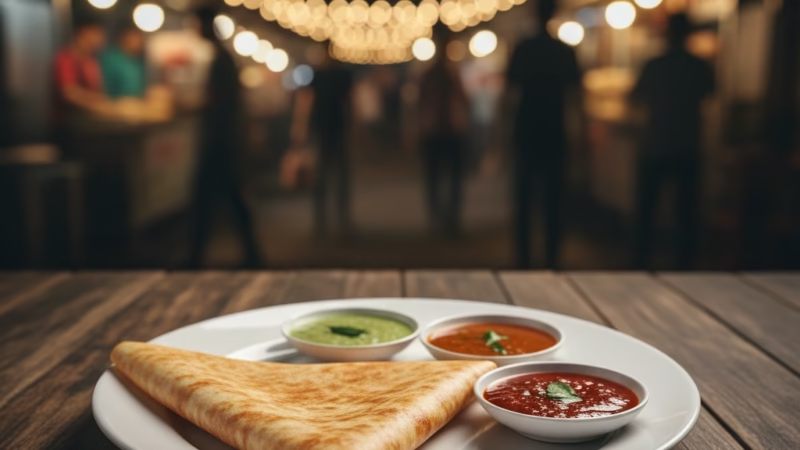
Tosai (also spelled Dosa or Thosai): Tosai is another name for dosa in Malaysia, a thin, savory pancake originating from South India, made from a fermented batter of rice and lentils. It is a popular breakfast dish in Malaysia and other countries, often served with chutneys and sambar or other gravies. The name “tosai” is used more commonly in regions with a significant Tamil diaspora, like Malaysia.
Tosai / dosa is a simple, home-cooked food, thought to have been more common in India, Malaysia and Singapore.
Origin
Dosa is a South Indian dish with conflicting claims of origin, but historical records point to both ancient Tamil territory and later development in Udupi, Karnataka. While a dosa-like dish is mentioned in 6th-century Tamil literature, the specific crispy dosa widely known today is often associated with the temple streets of Udupi.
Category
Breakfast / Snack / Street Food
Appearance
Thin, round, golden-brown crepe with slightly crisp edges.
Ingredients
- Rice
- Urad dal (split black gram)
- Fenugreek seeds
- Water
- Salt
Preparation
- Soak rice and urad dal (with fenugreek) separately for 4–6 hours.
- Grind into a smooth batter.
- Ferment overnight (8–12 hours).
- Pour batter on a hot griddle and spread thin in a circular motion.
- Drizzle oil or ghee on edges and cook until crisp.
Equipment
- Griddle / Tava / Non-stick pan
- Ladle for spreading batter
- Grinder or blender
Variations
- Masala Tosai (stuffed with spiced potato)
- Rava Tosai (made with semolina)
- Paper Tosai (extra thin and crispy)
- Set Tosai (soft, served in a set of 2–3)
Taste
Mildly tangy and savory; complemented by chutneys and sambar.
Texture
Crispy on the outside, soft on the inside; variations may be softer or thicker.
Aroma
Earthy, slightly fermented, warm aroma when freshly cooked.
Sound
Soft sizzle when batter contacts the hot griddle.
Cultural Significance
Staple South Indian breakfast; served at homes, restaurants, and temples.
Symbolism
Represents South Indian culinary tradition and communal breakfast culture.
Regional Cuisine
Tamil Nadu, Karnataka, Kerala, Andhra Pradesh, Telangana; also Malaysia, Singapore, Sri Lanka.
Social Context
Popular street food and restaurant dish; enjoyed across social classes.
Nutritional Information
- Calories: ~120 per plain tosai
- Carbohydrates: 20–25g
- Protein: 3–4g
- Fat: 1–2g (without oil/ghee)
Health Benefits
- Fermented batter aids digestion
- Low-fat, gluten-free
- Provides energy through complex carbs
Dietary Restrictions
Vegan-friendly; gluten-free if traditional.
Allergens
Contains legumes (urad dal); possible cross-contamination in restaurants.
Cost
India: ₹10–₹50 per piece
International restaurants: ~$2–$6
Production
Homemade or commercially produced; street vendors make fresh daily; frozen tosai available commercially.
Sustainability
Low environmental impact; uses locally sourced ingredients; minimal waste when fresh.
Availability
South Indian restaurants, street vendors, breakfast eateries, international South Indian chains.
History
Over 1,000 years old; referenced in Tamil literature; originally home-cooked, now global.
Anecdotes
- Paper tosai is a challenge to make due to thin spreading.
- Often paired with coconut chutney and sambar.
How to Prepare
- Soak, grind, and ferment rice and dal.
- Heat a griddle.
- Spread batter thinly on griddle.
- Cook until golden brown and crisp.
- Serve with chutneys and sambar.
FAQ
Q: Can tosai be made without fermentation?
A: Yes, but it will be less tangy and airy.
Q: What fillings can be used in masala tosai?
A: Spiced potatoes, onions, peas, paneer, or vegetables.

- Temperature
- Precipitation
- Rain Chance
- Wind
- Humidity
- Pressure


Q: How long does the batter last?
A: 3–4 days in the fridge; best fresh.












Comments are closed.