

Ninoy Aquino International Airport

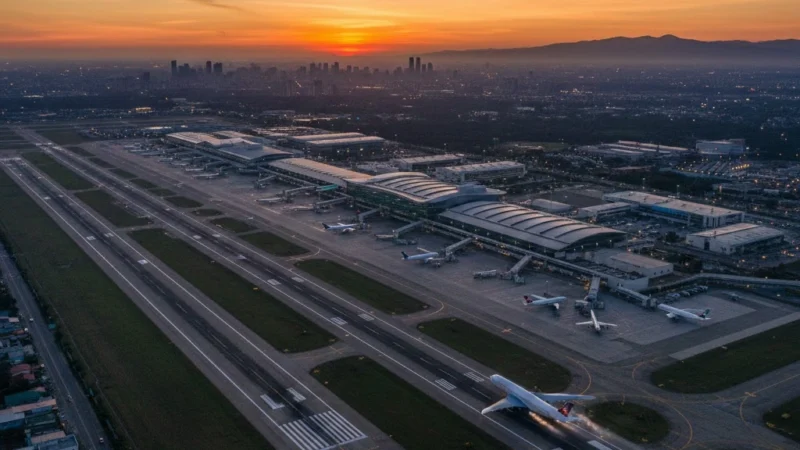
Ninoy Aquino International Airport (NAIA) (IATA: MNL, ICAO: RPLL) is the primary international airport of the Philippines, serving Metro Manila and surrounding regions. Located in the cities of Pasay and Parañaque, the airport lies about 7 kilometers south of Manila city centre. It is managed by the Manila International Airport Authority (MIAA) and serves as the main hub for Philippine Airlines, Cebu Pacific, and AirAsia Philippines. NAIA is one of Southeast Asia’s busiest airports, offering extensive domestic and international connectivity.
History
The airport traces its origins to the 1930s when the site was developed as Nichols Field under American administration. Commercial operations began in 1948, and the airport was officially named Manila International Airport in 1956. In 1987, it was renamed Ninoy Aquino International Airport to honour Senator Benigno “Ninoy” Aquino Jr., who was assassinated on the airport grounds in 1983. Over the decades, NAIA has undergone several expansions and modernization projects to meet growing passenger demand.
Airport Terminals
Ninoy Aquino International Airport consists of four terminals, each handling specific airline groups and flight types.
Terminal 1
- Handles international flights operated primarily by foreign airlines.
- Features duty-free shops, lounges, restaurants, and improved check-in facilities.
- Major carriers include Emirates, Qatar Airways, Saudia, Japan Airlines, and more.
Terminal 2 (Centennial Terminal)
- Dedicated to Philippine Airlines (PAL) for both domestic and international flights.
- Provides upgraded boarding gates, lounges, retail outlets, and a more streamlined passenger flow.
Terminal 3
- The newest and largest terminal at NAIA.
- Serves a mix of international and domestic flights including Cebu Pacific, All Nippon Airways, Emirates, and Cathay Pacific.
- Includes extensive dining options, shopping outlets, family facilities, and multiple lounges.
Terminal 4 (Domestic Terminal)
- A compact terminal serving low-cost and regional domestic carriers such as AirAsia Philippines and select charter airlines.
- Offers basic yet efficient check-in and boarding processes.
Airlines and Destinations
NAIA provides global connectivity with flights to:
- Asia: Singapore, Kuala Lumpur, Tokyo, Bangkok, Seoul, Dubai, Hong Kong, Taipei
- Middle East: Riyadh, Jeddah, Abu Dhabi, Doha, Kuwait
- Oceania: Sydney, Melbourne, Auckland
- North America: Los Angeles, San Francisco, Vancouver
- Domestic Philippines: Cebu, Davao, Iloilo, Bacolod, Cagayan de Oro, Zamboanga, Palawan, and more
Hub airlines such as Philippine Airlines, Cebu Pacific, and AirAsia Philippines operate extensive domestic networks while also serving regional and long-haul routes.
Facilities and Services
Passenger Amenities
- Free Wi-Fi
- ATMs, banks, and currency exchange
- Tourist information counters
- Baggage wrapping and storage
- Lost and found services
- Medical and emergency care
- Prayer rooms and baby care rooms
Shopping & Dining
- Duty-free stores in all international terminals
- Filipino and international restaurants
- Coffee shops, bakeries, and convenience stores
Lounges
- Philippine Airlines Mabuhay Lounge
- PAGSS Lounge
- SkyTeam Lounge
- Various pay-per-use lounges in Terminal 1 and Terminal 3
Accessibility
- Wheelchair-friendly facilities
- Designated assistance for passengers with reduced mobility
- Accessible restrooms and ramps
Ground Transportation
Taxis
- Airport-accredited white taxis
- Metered yellow taxis
- Readily available 24 hours across all terminals
Ride-Hailing
- Grab is the primary app-based service used by travellers in Manila.
Airport Buses
- Ube Express Premium Airport Bus connects NAIA to major districts such as Makati, Manila, Quezon City, and Entertainment City.
Public Transport
- Buses and jeepneys operate outside the airport complex connecting to nearby cities and major roads.
Car Rentals
- Available from both local and international rental companies.
Inter-Terminal Shuttle
- Regular shuttle buses connect Terminals 1, 2, 3, and 4.
Airport Infrastructure
Runways
NAIA operates two runways:
- Runway 06/24 – the main runway
- Runway 13/31 – secondary runway supporting domestic and general aviation
Cargo Operations
The airport supports major cargo carriers handling freight services across Asia and North America.
Future Expansion
To address increasing passenger traffic, upcoming developments include:
- Modernization of Terminals 1 and 2
- Infrastructure upgrades to improve airport capacity
- Traffic and runway optimization programs
- Coordination with the developing New Manila International Airport in Bulacan, set to complement NAIA in the late 2020s
How to Reach Ninoy Aquino International Airport
By Car
Accessible through NAIA Expressway (NAIAX), connecting to Skyway, Pasay, Parañaque, and major business districts.
By Bus
Ube Express operates scheduled airport buses between NAIA and Makati, Manila, Cubao, and other major hubs.
By Taxi or Ride-Hailing
Grab and airport taxis provide the most convenient door-to-door transportation.

 28°C
28°C
- Temperature
- Precipitation
- Rain Chance
- Wind
- Humidity
- Pressure


Conclusion
Ninoy Aquino International Airport remains the primary gateway to the Philippines, offering a wide range of services for both local and international travellers. With multiple terminals, extensive airline networks, and ongoing modernization, NAIA continues to play a vital role in supporting the country’s tourism, economy, and connectivity.





Comments are closed.