

Top Street Foods to Try at Malaysian Ramadan Bazaars

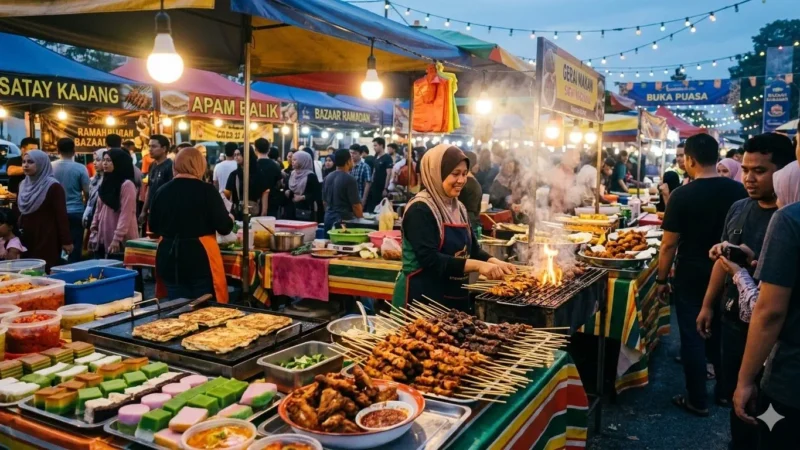
Ramadan in Malaysia is a vibrant celebration of faith, food, and community. Across the country, Ramadan bazaars (locally known as Pasar Ramadan) spring to life with stalls serving a wide variety of savory dishes, desserts, and drinks. Whether you are a local or a traveler, these bazaars are the ultimate destinations for breaking fast (iftar) and experiencing Malaysia’s rich culinary heritage.
Ramadan Coutdown 2026
Savory Street Foods You Must Try
1. Murtabak
A stuffed pancake filled with minced meat, eggs, and onions, murtabak is one of the most popular Ramadan bazaar dishes. Served with curry or dhal, it’s a filling choice perfect for iftar.
2. Roti John
A Malaysian street-style omelette sandwich, Roti John comes on a long bun with minced meat, onions, and sauces — ideal for a quick, satisfying snack.
3. Nasi Kerabu
This visually striking blue rice dish is colored using butterfly pea flowers and served with fresh herbs, fried chicken, and spicy sambal. Nasi Kerabu is a feast for the eyes and the taste buds.
4. Nasi Dagang & Nasi Briyani
- Nasi Dagang: Fragrant rice cooked with coconut milk, paired with fish curry, popular in the East Coast.
- Nasi Briyani: Spiced rice with chicken or lamb, served with raita and pickles — a hearty meal for breaking fast.
5. Satay
Charcoal-grilled skewers of chicken, beef, or lamb served with peanut sauce, onions, and cucumber. Satay is a must-try classic Malaysian street food.
6. Ayam Percik / Ayam Golek
Marinated, spiced, and grilled chicken coated in a rich sauce. Juicy and smoky, these grilled delights pair perfectly with rice dishes.
7. Ikan Bakar & Grilled Seafood
Grilled fish or squid with spice pastes and chili, sometimes topped with crushed peanuts. Ikan Bakar is a seafood favorite at Ramadan bazaars.
8. Popiah Basah
Fresh spring rolls stuffed with vegetables, prawns, and sweet-spicy sauce. Popiah Basah is light yet flavorful, balancing heavier meals.
Sweet Treats & Desserts
9. Bubur Lambuk
A savory porridge made with rice, coconut milk, and spices, traditionally prepared and distributed at mosques during Ramadan.
10. Kuih-Muih
Traditional bite-sized Malaysian desserts, including:
- Tepung Pelita: Steamed pandan coconut cake
- Putu Bambu: Palm sugar-filled rice cakes in bamboo
- Kuih Lapis / Onde-Onde / Seri Muka: Colorful layered or glutinous rice cakes
11. Apam Balik
Crispy pancakes filled with peanuts, sugar, and sometimes corn or chocolate. Sweet and crunchy, they are a must-have festive treat.
Refreshing Drinks & Snacks
- Air Bandung: Rose syrup with milk
- Air Kathira: Sweet, thick, gelatinous drink
- Fresh Sugarcane Juice & Fruit Juices: Mango, watermelon, and seasonal fruits
- Pisang Goreng (Fried Bananas): Golden, crispy banana fritters — simple yet addictive.
Tips for Bazaar Food Hunting
- Arrive Early: Popular dishes like murtabak, satay, and nasi briyani sell out fast, so come around 5–6 pm.
- Try a Mix: Sample savory dishes, sweet treats, and refreshing drinks to experience the full variety.
- Look for Regional Specialties: Different states have unique variations — Johor-style briyani, Kelantan nasi kerabu, and Sabah snacks.
Popular Ramadan Bazaars Across Malaysia
- Kuala Lumpur: Kampung Baru Bazaar, Jalan Masjid India Bazaar
- Penang: Lebuh Campbell Bazaar, Green Lane Bazaar
- Johor Bahru: Taman Pelangi Bazaar, Larkin Bazaar
- Kota Bharu: Buluh Kubu Bazaar
- Malacca: Jonker Street Ramadan Market
Each bazaar offers a unique culinary journey, with dishes that reflect Malaysia’s diverse cultures and local flavors.
Conclusion
Malaysia’s Ramadan bazaars are more than just markets — they are cultural hubs where tradition, flavor, and community come together. From savory murtabak and nasi briyani to sweet kuih-muih and refreshing drinks, there is something for everyone. Visiting these bazaars is the perfect way to experience authentic Malaysian cuisine, celebrate the holy month, and create unforgettable memories.
Frequently Asked Questions (FAQ)
Q1: When do Ramadan bazaars open in Malaysia?
A1: Most bazaars open in the late afternoon (around 4–5 pm) and close after iftar (around 8–9 pm).
Q2: Are the foods at Ramadan bazaars halal?
A2: Yes, all foods sold at Ramadan bazaars are halal, as these markets cater to the Muslim community.
Q3: What is the best time to visit a Ramadan bazaar?
A3: Arrive around 5–6 pm for the widest selection and to avoid missing popular dishes.
Q4: Can tourists try regional specialties at the bazaars?
A4: Absolutely! Bazaars often feature local dishes unique to each Malaysian state. For example, Kelantan has nasi kerabu, and Johor offers special briyani variations.
Q5: Are there vegetarian options at Ramadan bazaars?
A5: Yes, dishes like popiah basah, bubur lambuk (vegetarian versions), and certain kuih-muih cater to vegetarians.




Comments are closed.