

Sugarcane Juice

Malaysian Food
Sugarcane Juice
Origin
India and Southeast Asia; widely consumed in tropical regions globally.
Category
Beverage / Natural Juice
Appearance
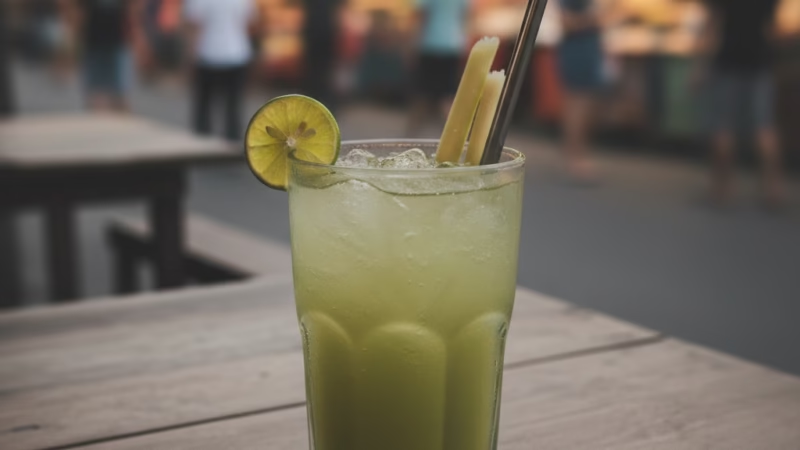
Clear to light golden-yellow liquid; sometimes slightly greenish depending on sugarcane variety.
Ingredients
- Fresh sugarcane stalks
- Optional: lemon, ginger, mint, or ice
Preparation
- Wash and peel sugarcane stalks.
- Crush through a sugarcane juicer or mechanical press.
- Strain to remove fibrous residue.
- Serve chilled; optionally add lemon, ginger, or mint.
Equipment
- Sugarcane juicer (manual or electric)
- Strainer
- Serving glass
Variations
- Lemon Sugarcane Juice
- Ginger Sugarcane Juice
- Mint Sugarcane Juice
- Spiced Sugarcane Juice (with black salt or chaat masala)
Taste
Naturally sweet, refreshing; tangy if lemon or ginger is added.
Texture
Thin liquid; may contain slight fibrous residue if unstrained.
Aroma
Sweet, grassy, and earthy; fragrant when flavored with herbs or spices.
Sound
Soft splashing when poured; crunching/pressing sound during extraction.
Cultural Significance
Popular street beverage in India, Southeast Asia, and Brazil; associated with hot weather refreshment and traditional markets.
Symbolism
Represents natural sweetness, vitality, and local traditions.
Regional Cuisine
- India: Common street drink
- Brazil: Known as “Caldo de Cana”
- Southeast Asia: Popular in Thailand, Vietnam, Malaysia
Social Context
Served at fairs, markets, and local events; typically sold by small vendors.
Nutritional Information (per 250ml)
- Calories: ~120 kcal
- Carbohydrates: 30g
- Sugars: 28g
- Protein: 0.2g
- Fat: 0g
- Fiber: 0.5g
Health Benefits
- Provides instant energy
- Contains antioxidants, calcium, potassium, magnesium
- Hydrating and cooling
Dietary Restrictions
Not suitable for diabetics; vegan and gluten-free otherwise.
Allergens
None common; avoid if sensitive to sugar.
Cost
Street vendors: INR 20–50 (India), $1–$3 internationally.
Production
Freshly extracted from sugarcane stalks; bottled versions available commercially.
Sustainability
Sugarcane is renewable, but industrial cultivation can consume large amounts of water.
Availability
Widely available in tropical countries; street vendors, juice bars, and markets.
History
Consumed for centuries; mentioned in ancient Indian Ayurvedic texts as a sweetener and health tonic.
Anecdotes
- Vendors often call out to attract customers.
- A summer staple in India, Brazil, and Southeast Asia.
How to Prepare
- Clean and cut sugarcane stalks.
- Feed through a juicer.
- Strain and pour into a glass.
- Add optional flavorings and serve chilled.

 30°C
30°C
- Temperature
- Precipitation
- Rain Chance
- Wind
- Humidity
- Pressure


FAQ
Q: Can it be stored?
A: Best consumed fresh; ferments if stored too long.
Q: Is it safe for children?
A: Yes, in moderation.
Q: Can it be mixed with other juices?
A: Yes, commonly blended with lime, pineapple, or ginger.












Comments are closed.