
Ramadan Traditions in Malaysia – Culture Food and Community

Ramadan is one of the most important and spiritually meaningful times of the year in Malaysia. As a Muslim-majority country with a rich multicultural heritage, Malaysia celebrates the holy month with a blend of religious devotion, vibrant food culture, and strong community traditions. During Ramadan, daily life changes across the country—from quiet mornings of fasting to lively evenings filled with bazaars, prayers, and family gatherings.
Cities like Kuala Lumpur, George Town, and Johor Bahru come alive with festive lights, night markets, and communal iftar meals. For both locals and visitors, experiencing Ramadan in Malaysia offers a unique cultural journey that highlights faith, generosity, and the country’s famous culinary traditions.
Ramadan Coutdown 2026
The Spiritual Significance of Ramadan in Malaysia
At the heart of Ramadan is spirituality and reflection. Muslims fast from dawn to sunset, refraining from food and drink while focusing on prayer, patience, and self-discipline.
Mosques play a central role throughout the month. Large congregations gather each night for Tarawih prayers, a special set of prayers performed after the evening prayer. Some of the most iconic places to experience Ramadan prayers include the magnificent Masjid Negara and the stunning Putra Mosque.
During Ramadan, mosques often host:
- Quran recitation sessions (Tadarus)
- Religious talks and lectures
- Community iftar programs
- Charity initiatives and food distribution
The last ten nights of Ramadan are particularly sacred, as Muslims seek Laylatul Qadr, believed to be the holiest night in the Islamic calendar.
Suhoor: The Pre-Dawn Ramadan Meal
Before the fasting day begins, Muslims wake up early for suhoor, the pre-dawn meal eaten before the first prayer of the day. This meal is important because it provides energy for the long hours of fasting.
In Malaysia, suhoor meals are usually simple but filling. Popular options include:
- Nasi lemak with sambal and boiled eggs
- Rice with fried fish or chicken
- Roti canai with dhal or curry
- Fruits, yogurt, and tea
In major cities, many restaurants remain open late into the night or early morning to accommodate people looking for suhoor meals. Hotels also provide special Ramadan dining packages that include both suhoor and iftar buffets.
Ramadan Bazaars: Malaysia’s Famous Food Markets
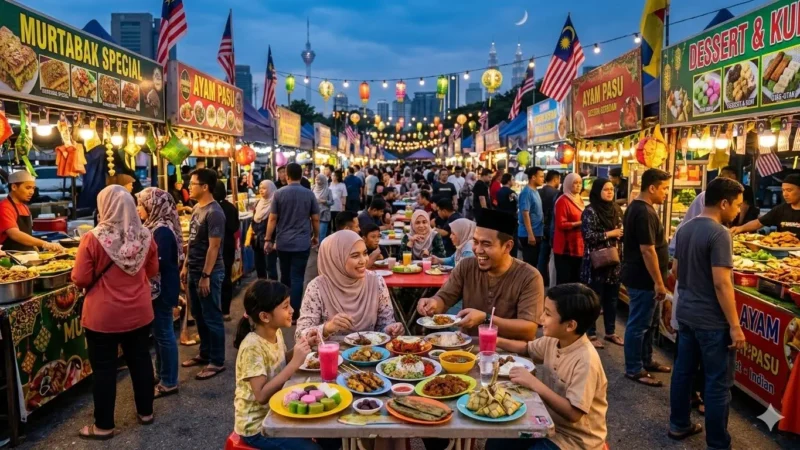
One of the most exciting Ramadan traditions in Malaysia is the Ramadan bazaar. These temporary evening markets appear across cities and neighborhoods, offering hundreds of dishes prepared specifically for iftar.
Among the most famous bazaars is the one located near Jalan Tuanku Abdul Rahman, which attracts thousands of visitors each year.
Popular foods found at Ramadan bazaars include:
- Satay – grilled skewered meat served with peanut sauce
- Murtabak – stuffed pancake filled with meat and onions
- Roti John – sandwich with egg and minced meat
- Ayam Percik – grilled chicken with rich coconut sauce
- Laksa – spicy noodle soup
- Kuih-muih – colorful traditional Malaysian desserts
For many Malaysians, visiting the bazaar in the late afternoon is part of the daily Ramadan routine.
Iftar: Breaking the Fast Together
Iftar is the meal that breaks the fast at sunset and is one of the most important moments of the day. Malaysians traditionally begin iftar with dates and water, following the practice of the Prophet Muhammad.
After the sunset prayer, families enjoy a full meal together. Popular iftar dishes include:
- Bubur lambuk – savory rice porridge with spices and meat
- Rendang – slow-cooked spicy meat dish
- Nasi briyani with chicken or lamb
- Grilled fish and seafood
- Traditional Malay desserts and drinks
Hotels and restaurants across Malaysia also host elaborate Ramadan buffet dinners, featuring local Malay cuisine as well as international dishes.
Bubur Lambuk: A Special Ramadan Tradition
A beloved Ramadan dish in Malaysia is bubur lambuk, a fragrant rice porridge cooked with spices, herbs, and meat.
One of the most famous traditions takes place at Masjid Jamek Kampung Baru, where volunteers cook huge pots of bubur lambuk every afternoon during Ramadan.
The dish is typically made with:
- Rice and coconut milk
- Beef or chicken
- Lemongrass, ginger, and pandan leaves
- Spices like cinnamon and cloves
Thousands of portions are distributed free to the public, reflecting the generosity and communal spirit of the holy month.
Charity, Zakat, and Community Spirit
Ramadan is also a time of generosity and compassion. Many Malaysians increase their charitable giving during this period.
Key charitable practices include:
- Zakat – mandatory charity given to those in need
- Mosque-led food distribution programs
- Corporate and NGO Ramadan charity drives
- Sharing meals with neighbors and the less fortunate
Community iftar events are also common, where mosques and organizations provide free meals to anyone who wishes to join.
Ramadan Nights in Malaysia
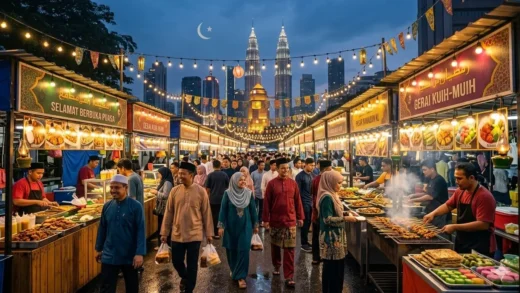
After sunset, Malaysian cities transform into vibrant social hubs. Streets are decorated with festive lights, restaurants are filled with families enjoying iftar, and bazaars stay open late into the evening.
Cities such as Kuala Lumpur, Putrajaya, and George Town offer some of the most exciting Ramadan night experiences.
People often stay out late shopping, visiting night markets, or attending mosque prayers before preparing for the next day’s fast.
Conclusion
Ramadan traditions in Malaysia beautifully combine spiritual devotion, rich culinary culture, and strong community values. From peaceful mosque gatherings and charitable initiatives to bustling Ramadan bazaars and family iftar meals, the holy month reflects the warmth and generosity of Malaysian society.
For travelers, experiencing Ramadan in Malaysia offers a memorable cultural journey filled with delicious food, vibrant night markets, and meaningful traditions that showcase the country’s unique identity.
FAQ: Ramadan Traditions in Malaysia
1. What are the most popular Ramadan traditions in Malaysia?
Ramadan bazaars, Tarawih prayers, community iftar meals, and the preparation of bubur lambuk are among the most popular traditions.
2. What foods are commonly eaten during iftar in Malaysia?
Popular foods include bubur lambuk, nasi briyani, rendang, satay, laksa, and traditional kuih desserts.
3. Are Ramadan bazaars open to tourists?
Yes, Ramadan bazaars are open to everyone and are one of the best ways to experience Malaysian food culture.
4. Can non-Muslims participate in Ramadan activities?
Yes. Non-Muslims often visit bazaars, join iftar meals, and enjoy the festive Ramadan atmosphere.
5. When do Ramadan bazaars usually open?
Most bazaars open in the late afternoon around 4:00 PM and continue until after sunset.




Comments are closed.