

Buah Namnam

Introduction
Buah Namnam is a tropical fruit deeply woven into Malaysia’s cultural and culinary tapestry. Renowned for its distinctive aroma, complex flavor, and nutritional richness, it occupies a unique place in both traditional and modern cuisine. Beyond being a fresh fruit, Buah Namnam inspires a range of desserts, beverages, and savory dishes, reflecting the evolution of Malaysian gastronomy. It also serves as an economic and cultural asset, linking rural communities, agro-tourism, and heritage food experiences.
Origin
Buah Namnam (Ziziphus namnamensis), part of the Rhamnaceae family, originates from the tropical rainforests of Southeast Asia, particularly Malaysia. It was traditionally cultivated in rural communities for its taste, aroma, and nutritional value. Over time, its cultivation spread to neighboring regions such as southern Thailand and Indonesia. Today, Buah Namnam supports both subsistence agriculture and commercial markets, contributing to local livelihoods and agro-tourism initiatives.
Category
| Scientific Name | Family | Category | Type (Seasonality) |
|---|---|---|---|
| Ziziphus namnamensis | Rhamnaceae | Tropical Fruit | Seasonal (March–June) |
Appearance
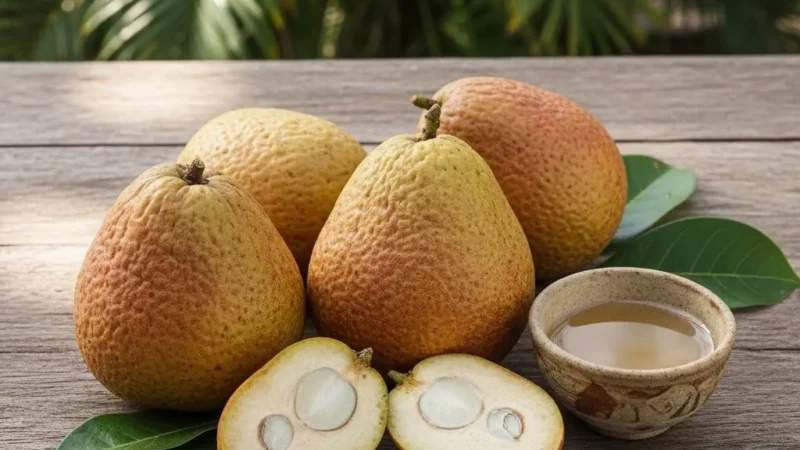
Buah Namnam is medium-sized, typically 4–6 cm in diameter. Its skin is smooth and glossy, transitioning from green when unripe to amber upon ripening. The semi-translucent flesh surrounds a firm seed, and subtle visual markers such as an oval indentation at the stem and fine vein patterns help identify ripeness.
Popular Varieties
| Variety | Local Name | Distinctive Features | Region of Prominence |
|---|---|---|---|
| Namnam Merah | Buah Merah | Reddish skin, sweeter flesh | Pahang, Terengganu |
| Namnam Hijau | Buah Hijau | Green skin, slightly tart | Perak, Kelantan |
| Namnam Emas | Buah Emas | Golden hue, aromatic, high sugar content | Johor, Selangor |
Preparation
Buah Namnam is enjoyed in multiple forms:
- Fresh: Eaten raw as a nutritious snack.
- Snacks: Dried or candied for convenient consumption.
- Desserts: Used in puddings, ice creams, and traditional Malaysian kuih.
- Traditional Cuisine: Incorporated into sweet-sour sauces, stews, and local recipes.
- Beverages: Blended into juices, smoothies, or herbal infusions.
Equipment
- Paring knife for peeling
- Spoon for extracting flesh around the seed
- Cutting board
- Blender or juicer for beverages
Taste
Buah Namnam delivers a balanced flavor: an initial sweetness complemented by subtle tanginess and floral notes. Different varieties exhibit slight variations in sweetness and acidity, making it versatile for both raw consumption and culinary applications.
Texture
The flesh is tender with mild fibrous segments near the seed. Juicy and refreshing, it provides a pleasant mouthfeel while maintaining structural integrity suitable for cooking or beverages.
Aroma
The fruit emits a gentle tropical fragrance with hints of floral and citrus undertones. Fully ripe Buah Namnam releases a sweet, inviting aroma, enhancing its appeal in both culinary and social contexts.
Cultural Significance
Buah Namnam has an enduring role in Malaysian culture. It appears in festive meals, harvest celebrations, and family gatherings. Beyond its culinary uses, it symbolizes local heritage, prosperity, and community cohesion. Modern interpretations in desserts and beverages reflect its evolving significance in contemporary Malaysian gastronomy.
Regional Cultivation
| State/Region | Famous For | Harvest Period |
|---|---|---|
| Pahang | Namnam Merah | March – May |
| Terengganu | Wild Namnam | March – June |
| Perak | Namnam Hijau | April – June |
| Johor | Namnam Emas | March – May |
| Selangor | Golden Namnam Cultivars | April – June |
Social Context
Buah Namnam is commonly enjoyed at wet markets, roadside stalls, and seasonal fairs. Families often select fresh fruits during weekend visits, and preserved varieties are popular for home use. The fruit also features in festivals and community gatherings, reinforcing social bonds and intergenerational culinary traditions.
Nutritional Information (per 100g)
| Nutrient | Content |
|---|---|
| Calories | 68 kcal |
| Carbs | 17 g |
| Protein | 1.2 g |
| Fat | 0.5 g |
| Fiber | 3.4 g |
| Vitamins | Vitamin C, Vitamin A, B-complex |
| Minerals | Potassium, Magnesium, Iron |
Health Benefits
- Supports digestive health with high fiber content
- Boosts immunity through vitamin C and antioxidants
- Contributes to heart health with potassium and low fat
- Provides energy and hydration through natural sugars and water content
- Promotes skin vitality via vitamins A and C
Dietary Restrictions
- Monitor intake for individuals with diabetes due to natural sugars
- Acid-sensitive individuals may experience mild discomfort
- High fiber may affect gastrointestinal sensitivities in some individuals
Allergens
- Rare reactions in those sensitive to tropical fruits
- Occasional mild skin irritation for sensitive individuals
Cost
| Variety | Price Range (per kg) |
|---|---|
| Namnam Merah | RM 20 – RM 35 |
| Namnam Hijau | RM 15 – RM 25 |
| Namnam Emas | RM 25 – RM 40 |
Production & Export
Buah Namnam contributes to local economies and rural livelihoods. Malaysia exports it to Singapore, Hong Kong, and select Middle Eastern markets. Its growth supports agro-tourism and the development of value-added products, positioning it as both a cultural and commercial asset.
Symbolism
Buah Namnam represents heritage, abundance, and authenticity. It embodies Malaysia’s tropical biodiversity and culinary traditions, symbolizing community, pride, and the country’s commitment to preserving and promoting its unique natural resources.




Comments are closed.