

Beyond the Postcard- Experiencing Hari Raya Aidilfitri in Malaysia Like a Local

Introduction: A Festival That Becomes a National Experience
Hari Raya Aidilfitri in Malaysia is not just a religious celebration—it is a nationwide cultural transformation. Cities slow down, villages come alive, and every home becomes a space of warmth, generosity, and reunion.
Unlike many festivals around the world, Eid in Malaysia blends spirituality with multicultural harmony, making it one of the most unique travel experiences in Southeast Asia.
The Heart of Celebration: Malaysia’s Open House Culture
One of the most defining features of Hari Raya in Malaysia is the Open House tradition, known locally as Rumah Terbuka.
During this period:
- Homes are open to guests of all backgrounds
- Friends, neighbors, and strangers are warmly welcomed
- Tables are filled with traditional Malay festive dishes
- Conversations replace formalities
This tradition reflects Malaysia’s strong cultural value of muhibbah—unity, goodwill, and respect across communities.
It is not uncommon for visitors to experience multiple open houses in a single day, each offering a different taste of hospitality.
Balik Kampung: The Great Malaysian Homecoming
Every year, millions of Malaysians travel back to their hometowns in a mass movement known as Balik Kampung.
Major cities such as Kuala Lumpur become noticeably quieter as families return to rural villages (kampungs).
What makes Balik Kampung special?
- Long road journeys filled with excitement
- Reunions with extended family
- Traditional wooden homes prepared for guests
- Emotional homecoming after months apart
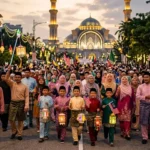
At night, kampungs glow with pelita oil lamps, creating a peaceful and nostalgic atmosphere that defines the spirit of Hari Raya.
Traditional Hari Raya Foods You Must Try
Food is the soul of Hari Raya celebrations. Every dish carries cultural meaning and is prepared with patience and tradition.
1. Ketupat
Rice packed in woven palm leaves and boiled until firm, symbolizing unity and togetherness.
2. Rendang
A slow-cooked meat dish simmered in coconut milk and spices until rich, dark, and deeply flavorful.
3. Lemang
Glutinous rice cooked in bamboo over an open fire, giving it a smoky aroma and creamy texture.
4. Kuih Raya
A colorful selection of festive cookies, including pineapple tarts and buttery traditional biscuits.
Each dish reflects Malaysia’s culinary heritage and the importance of shared meals during celebrations.
Cultural Fashion: A Showcase of Malaysian Identity
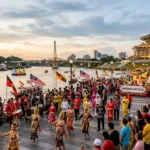
Hari Raya is also a visual celebration of traditional clothing.
Men wear:
- Baju Melayu
- Sampin (woven waist cloth)
- Songkok (traditional cap)
Women wear:
- Baju Kurung
- Baju Kebaya
These outfits transform streets into a vibrant cultural runway, highlighting Malaysia’s rich textile and design heritage.
The Kampung Experience: Where Tradition Comes Alive
While cities celebrate, the true heart of Hari Raya is often found in rural villages.
Kampung life during Hari Raya includes:
- Family gatherings in wooden homes
- Shared cooking and preparation
- Evening prayers and community visits
- Children playing in open spaces
This environment offers travelers an authentic cultural experience that goes beyond sightseeing.
A Festival That Reflects Malaysia’s Identity
Hari Raya Aidilfitri represents more than tradition—it reflects national identity. It brings together people of different backgrounds in a shared celebration of harmony and respect.
Organizations like Tourism Malaysia actively promote this cultural richness to international visitors, positioning Malaysia as a top destination for immersive cultural tourism.
Travel Tips for Experiencing Hari Raya in Malaysia
If you plan to experience Hari Raya in Malaysia, keep these tips in mind:
- Book transport and accommodation early (peak travel season)
- Respect local customs during open house visits
- Dress modestly, especially in rural areas
- Be prepared for heavy traffic during Balik Kampung
- Try multiple traditional dishes at different homes

 30°C
30°C
- Temperature
- Precipitation
- Rain Chance
- Wind
- Humidity
- Pressure


Conclusion: A Celebration of Unity and Humanity
Hari Raya Aidilfitri in Malaysia is more than a festival—it is a living cultural masterpiece. It blends faith, food, family, and tradition into a shared national experience.
Whether in the vibrant streets of Kuala Lumpur or the quiet charm of a kampung, the message remains the same: celebration is best when shared.


Comments are closed.