Malaysia’s street food scene is one of the most dynamic in Asia, shaped by tropical weather, multicultural traditions, and vibrant festivals. For travelers and food lovers, timing your visit can unlock a completely different culinary experience. From pungent durian seasons to festive night markets and monsoon comfort foods, this guide explores Malaysia’s best seasonal street eats and where to find them.
Why Seasonal Street Food Matters in Malaysia
Malaysia’s climate and cultural calendar play a major role in what appears on the streets. Unlike static food destinations, the country’s street food culture evolves throughout the year:
- Tropical fruits peak during specific months
- Religious festivals introduce exclusive dishes
- Weather influences cooking styles and cravings
- Regional harvests bring rare, local specialties
This makes culinary tourism in Malaysia not just about what you eat, but when you eat it.
Durian Season: The King of Fruits Takes Over
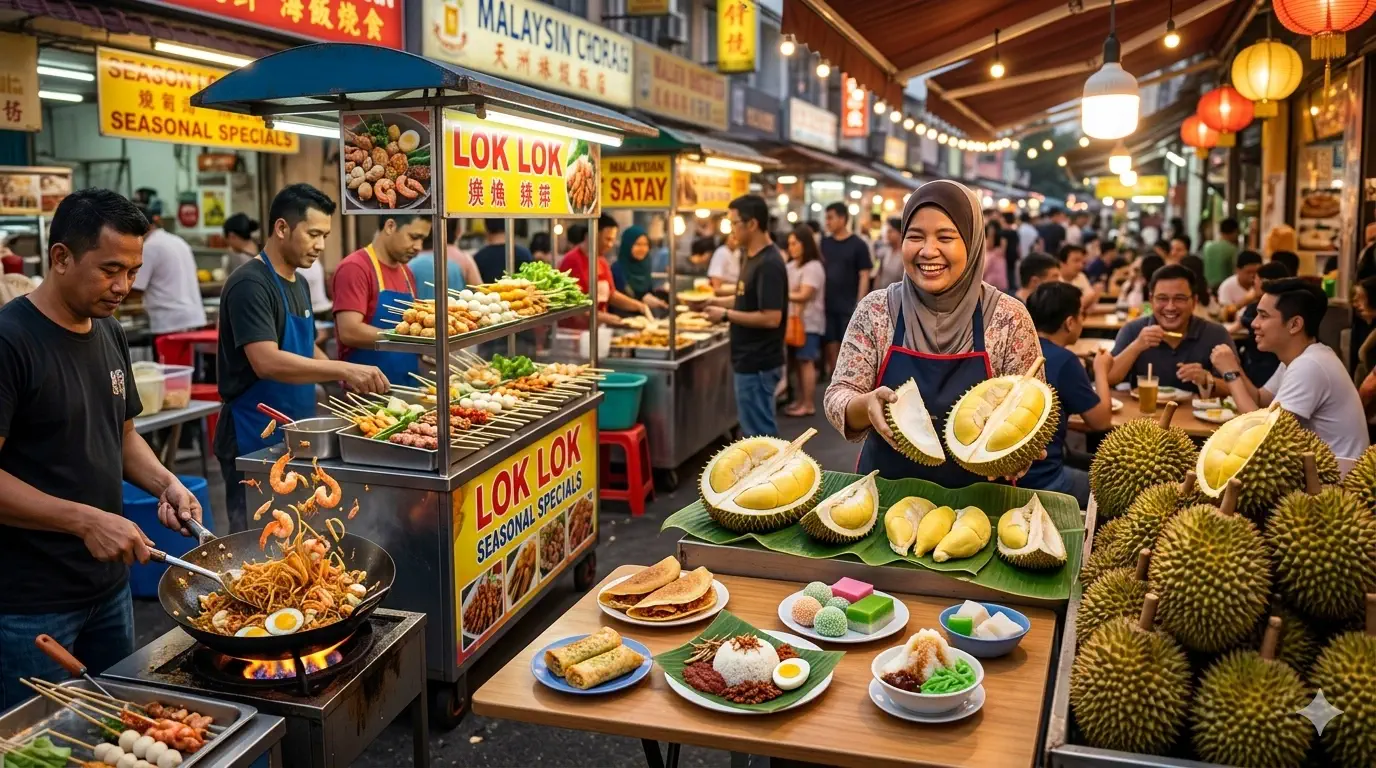
The arrival of Durian season (typically May to August) transforms Malaysia into a paradise for adventurous eaters.
What to Expect
Durian is famous for its creamy texture and intense aroma. While controversial, it is deeply loved by locals and considered a must-try experience.
Popular Varieties
- Musang King – Rich, buttery, and slightly bitter
- D24 Durian – Milder and more balanced
Where to Try
- Street stalls in Kuala Lumpur
- Night markets in Penang
- Orchards in Raub
Ramadan Bazaars: Malaysia’s Most Vibrant Food Markets
During Ramadan, food culture shifts dramatically. Across the country, temporary street markets—known as Ramadan bazaars—offer an explosion of flavors before sunset.
Must-Try Dishes
- Roti John – A hearty, sauce-filled sandwich
- Murtabak – Crispy stuffed flatbread
- Satay – Chargrilled skewers with peanut sauce
- Traditional kuih (bite-sized desserts)
Top Locations
- Shah Alam
- Kuala Lumpur
These bazaars are not just about food—they’re a cultural experience filled with energy, community, and tradition.
Monsoon Season Comfort Food
When the rainy season arrives, especially on the west coast between November and February, Malaysians turn to hot, satisfying street food.
Rainy-Day Favorites
- Char Kway Teow – Smoky, wok-fried noodles
- Hokkien Mee – Thick noodles in dark soy gravy
- Laksa – Spicy, tangy soup noodles
Best Places to Eat
- George Town
- Ipoh
Search-friendly keywords: “Malaysia street food in rainy season” and “best noodle dishes Malaysia.”
Tropical Desserts for Hot Weather
Malaysia’s year-round heat makes cold desserts an essential part of street food culture.
Must-Try Desserts
- Cendol – Coconut milk, palm sugar, and pandan jelly
- Ais Kacang – Colorful shaved ice with sweet toppings
Where to Find Them
These desserts are popular search terms under “best desserts in Malaysia” and “Malaysian street sweets.”
Harvest Festivals and Indigenous Flavors
Malaysia’s cultural diversity shines during harvest festivals, introducing rare dishes tied to tradition.
Key Festivals
Unique Dishes
- Hinava (raw fish salad)
- Bamboo-cooked rice and meats
These foods are typically unavailable outside festival periods, making them a unique draw for culinary tourists.
Practical Tips for Food Travelers
- Visit night markets (pasar malam) for the widest variety
- Follow local crowds for the most authentic stalls
- Carry cash, as many vendors don’t accept cards
- Be open to trying unfamiliar flavors and textures
- Check seasonal calendars before planning your trip
Conclusion
Malaysia’s seasonal street food offers a constantly evolving culinary landscape. Whether you’re exploring durian stalls in summer, indulging in Ramadan bazaars, or enjoying steaming noodles during the monsoon, each season reveals a new layer of flavor and culture.
For food lovers, Malaysia isn’t just a destination—it’s a year-round tasting journey shaped by time, tradition, and taste.