

Golden Mile Complex

Overview
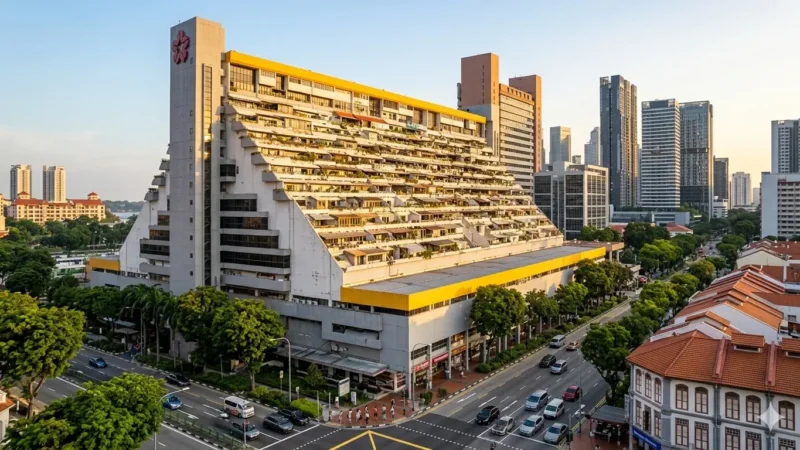
Golden Mile Complex is one of Singapore’s most iconic architectural landmarks, located along Beach Road in the Kallang district. Completed in 1973, it stands as one of the country’s earliest mixed-use developments, integrating residential, commercial, and office spaces into a single structure. Known for its bold Brutalist design and cultural significance, the complex represents a key milestone in Singapore’s urban development.
About
Golden Mile Complex was designed by DP Architects as a “vertical city,” a concept that combines living, working, and leisure spaces in one building. Its stepped terrace design allows natural ventilation and light into each unit, making it a forward-thinking project for its time.
Over the years, the complex became known as “Little Thailand” due to its concentration of Thai businesses, restaurants, and cultural services. In 2021, it was gazetted for conservation, ensuring that its architectural and cultural legacy will be preserved even as redevelopment progresses.
Must-Try Experiences
Visitors can enjoy a variety of unique experiences associated with Golden Mile Complex:
- Explore authentic Thai eateries and specialty stores
- Admire the Brutalist architecture and terraced façade
- Capture photographs of one of Singapore’s most distinctive buildings
- Experience the cultural blend of Thai and Singaporean communities
- Discover niche travel agencies and traditional shops
Ticket Details
- Entry Fee: Free
- Access: Public areas such as retail and common spaces
- Note: Currently under redevelopment; access may be restricted until reopening
Facilities
Golden Mile Complex historically offered a wide range of facilities:
- Retail outlets and dining options
- Office spaces
- Residential units
- Parking facilities
- Elevators and staircases
- Public restrooms
Future redevelopment plans are expected to upgrade these facilities while preserving the building’s heritage features.
Nearby Attractions
Golden Mile Complex is located near several popular attractions:
- Kampong Glam – A vibrant cultural enclave
- Haji Lane – Known for boutique shops and cafes
- Sultan Mosque – A historic religious landmark
- Bugis Street – A bustling shopping destination
- Singapore Flyer – Offers panoramic city views
Rating & Reviews
- Average Rating: 4.0 out of 5
Visitors commonly highlight:
- Unique architectural style
- Cultural diversity and Thai influence
- Historical importance
Before redevelopment, some reviews mentioned that the building showed signs of aging, but its charm and character remained strong.
How to Reach
Golden Mile Complex is easily accessible via public and private transport:
- Nearest MRT Station: Nicoll Highway MRT Station (Circle Line), approximately a 5-minute walk
- Bus Services: Multiple routes operate along Beach Road
- Taxi/Car: Accessible via Nicoll Highway and nearby major roads
Wikipedia Reference
For more in-depth historical details, refer to:
- Golden Mile Complex
FAQ
1. Is Golden Mile Complex open to visitors?
It is currently under redevelopment, and public access may be limited until completion.
2. Why is it called “Little Thailand”?
Because of the large number of Thai-owned businesses, restaurants, and services that operated within the complex.
3. What makes Golden Mile Complex unique?
Its Brutalist architecture and early mixed-use concept make it a standout landmark in Singapore.
4. Is there an entry fee?
No, entry is free when the building is open to the public.
My Review
Golden Mile Complex is a remarkable example of how architecture can reflect both innovation and cultural identity. Its bold design sets it apart from modern glass skyscrapers, while its history as a Thai cultural hub adds depth and character. Even during redevelopment, its importance in Singapore’s urban story remains undeniable.

- Temperature
- Precipitation
- Rain Chance
- Wind
- Humidity
- Pressure


Conclusion
Golden Mile Complex continues to be a symbol of Singapore’s architectural ambition and multicultural heritage. With conservation efforts in place and redevelopment underway, it is set to transform into a modern destination while preserving its historic essence. This makes it a must-know landmark for travelers, architecture enthusiasts, and anyone interested in Singapore’s evolving cityscape.






Comments are closed.