

Understanding MYR vs RM in the Malaysian Currency

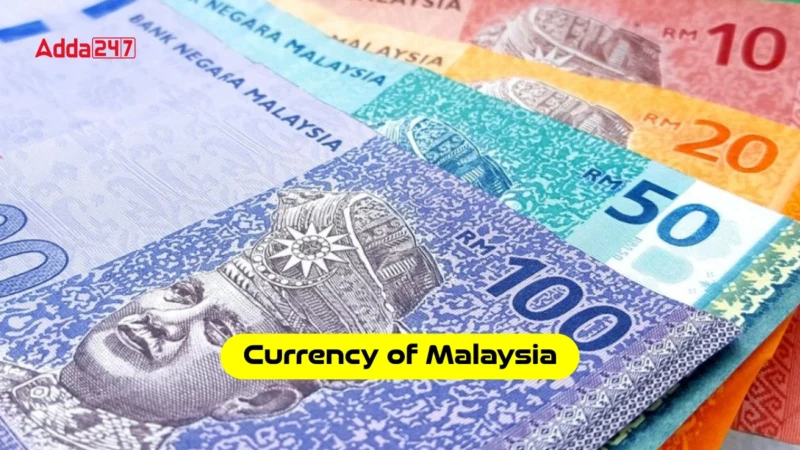
MYR vs RM Summary
To streamline financial operations and ensure message discipline across customer-facing and regulatory workflows, it is essential to understand the functional distinction between MYR, the ISO-standard code, and RM, the commercial symbol for the Malaysian Ringgit. This guide provides a consolidated view to support pricing strategy, compliance alignment, and communication integrity.
What Is the Malaysian Ringgit?
The Malaysian Ringgit is Malaysia’s official legal tender. In market communications, POS systems, travel commerce, aviation, e-commerce, and hospitality pricing matrices, the Ringgit plays a pivotal role as the baseline monetary unit.
MYR vs RM: A Strategic Breakdown
| Attribute | MYR | RM |
|---|---|---|
| Classification | ISO 4217 Currency Code | Currency Symbol |
| Primary Use Case | Financial reporting, banking, cross-border settlement, FX tables | Retail pricing, marketing, invoices, tickets, customer display units |
| Stakeholder Alignment | Regulators, banks, payment gateways, auditors | Consumers, merchants, travel operators, event partners |
| Format Example | MYR 250 | RM 250 |
| Documentation Fit | Contracts, compliance decks, reconciliation sheets | Posters, websites, menus, ticketing screens |
Why the Distinction Matters
In today’s high-velocity travel and commerce landscape, maintaining currency accuracy mitigates risk, strengthens brand trust, and enhances pricing transparency. The MYR/RM distinction ensures:
- Regulatory alignment with international standards
- Consistency across digital and offline pricing frameworks
- Operational efficiency for accounting and reconciliation
- Customer clarity, reducing friction in purchase journeys
Where You Should Use Each
Use MYR When:
- Publishing financial statements
- Integrating with global payment processors
- Displaying FX conversions or multi-currency price decks
- Communicating with international partners or auditors
Use RM When:
- Designing consumer-facing marketing assets
- Displaying prices on ticketing platforms (e.g., events, flights, hospitality)
- Printing menus, signage, or retail POS labels
- Creating e-commerce listings for Malaysia-based audiences
Best-Practice Recommendations
To ensure enterprise-grade consistency:
- Adopt MYR as the system-of-record identifier in all backend and financial infrastructure.
- Deploy RM as the customer-facing symbol to drive intuitive understanding and competitive clarity.
- Standardize currency formatting guidelines across design, content, and finance teams.
- Integrate MYR into FX conversion modules for accuracy across markets.
- Audit legacy assets annually to ensure alignment with current currency representation standards.
Quick FAQ
Is Malaysia’s currency called MYR or RM?
The currency is the Malaysian Ringgit; MYR is the official code, RM is the symbol.
Is it MYR or RM?
The Malaysian ringgit is the official currency of Malaysia. Its currency code is MYR and its symbol is RM.
Which one appears on banknotes?
RM — the consumer-recognized symbol.
Which one should businesses use for pricing online?
RM for customer visibility; MYR in backend and reporting.
Is MYR required for international payments?
Yes — it is the ISO-compliant code used globally.
MYR vs RM
In a landscape where accuracy fuels customer trust and operational velocity, deploying MYR and RM in their correct contexts is a non-negotiable best practice. Leveraging both appropriately reinforces brand consistency, reduces transactional ambiguity, and ensures your financial communication framework is future-ready.





Comments are closed.