

Short-Haul Power Route – KL–Singapore Operational Snapshot

Introduction
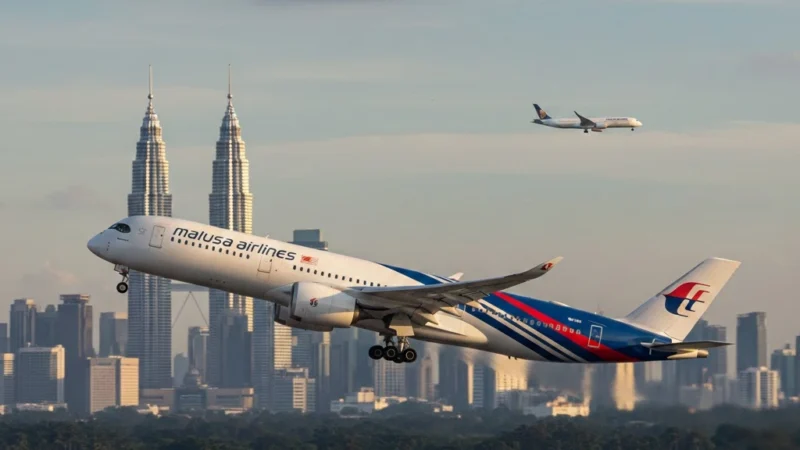
The Kuala Lumpur (KUL) to Singapore (SIN) route stands as one of the busiest short-haul international air corridors globally. With strong business ties, high-frequency commuter traffic, and a mix of full-service and low-cost carriers, this route is a vital link in Southeast Asia’s aviation ecosystem. In 2025, the KUL–SIN route continues to demonstrate remarkable resilience and growth.
Route Significance & Passenger Demand
The KUL–SIN corridor is a short-haul powerhouse, carrying millions of passengers annually. According to recent data:
- 2023: Approximately 4.9 million seats were offered on this route, making it the world’s busiest international flight corridor.
- 2024: Despite global fluctuations, capacity increased by 10% year-on-year.
- May 2025: Scheduled seats reached nearly 484,000 for the month, reflecting consistent demand growth.
This high demand is driven by a combination of business travel, tourism, and cross-border commuting, particularly by Malaysians working in Singapore.
Airlines & Competitive Landscape
The KUL–SIN route hosts a diverse mix of carriers:
- Full-service airlines: Singapore Airlines (SIA), Malaysia Airlines (MAS)
- Low-cost carriers: AirAsia, Scoot
A strategic partnership between SIA and MAS now aims to coordinate flights, offering nearly 12,000 return flights annually, with an estimated 2.3 million seats. This collaboration enhances scheduling efficiency and competitiveness, challenging low-cost carriers for market share.
Operational Economics
Key operational insights for this short-haul route include:
- Distance: 296 km
- Aircraft type: Predominantly single-aisle jets (A320 family, etc.)
- Turnaround efficiency: Short flights allow high aircraft utilization, maximizing daily flight frequency.
Such operational efficiency helps airlines maintain profitability even under competitive market conditions.
Ticket Prices
Average one-way fares on the KUL–SIN route vary by carrier and booking class:
- Malaysia Airlines / Singapore Airlines: $100–$180 (economy, one-way)
- AirAsia / Scoot: $40–$90 (economy, promotional fares)
Prices fluctuate based on seasonality, advance booking, and demand patterns.
Strategic Implications
- Collaboration vs. Competition: The SIA–MAS tie-up could streamline services and optimize revenue while increasing pressure on low-cost carriers.
- Infrastructure readiness: Both KLIA and Changi Airports efficiently handle high-frequency short-haul operations.
- Growth outlook: The route is projected to continue growing due to robust business and commuter demand, despite potential alternative transport options like high-speed rail in the future.
FAQs
Q1: How long is the flight from Kuala Lumpur to Singapore?
A1: The flight typically takes 1 hour, covering approximately 296 km.
Q2: Which airlines operate on the KUL–SIN route?
A2: Full-service carriers like Singapore Airlines and Malaysia Airlines, as well as low-cost carriers like AirAsia and Scoot, operate this route.
Q3: What is the average ticket price for this route?
A3: Economy fares range from $40 to $180, depending on the airline and booking conditions.
Q4: Is the KUL–SIN route recovering after the pandemic?
A4: Yes, passenger demand and seat capacity have steadily increased since 2023, indicating strong recovery and growth.
Conclusion
The Kuala Lumpur–Singapore corridor exemplifies a strategic short-haul powerhouse, balancing high passenger demand, airline competition, and operational efficiency. With strategic partnerships and consistent demand growth, this route will remain central to Southeast Asia’s aviation network in the coming years.






Comments are closed.