

Pilgrimage & Commerce Synergy – KL–Jeddah Route Performance

Introduction
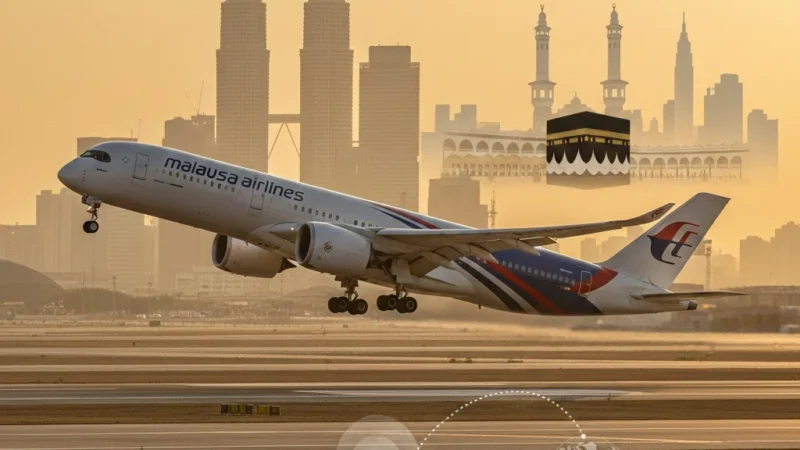
The Kuala Lumpur–Jeddah (KL–Jeddah) air route is more than a transport corridor—it is a strategic link connecting pilgrimage and commerce between Malaysia and Saudi Arabia. Every year, thousands of Malaysian pilgrims travel to Mecca and Medina for Hajj and Umrah, generating significant economic activity. Simultaneously, the route strengthens Malaysia’s halal trade and investment ties, creating a unique pilgrimage-commerce synergy that benefits both nations.
Pilgrimage Traffic on the KL–Jeddah Route
Malaysia holds a substantial Hajj quota from Saudi Arabia, with approximately 31,600 pilgrims annually. Additionally, Umrah travelers number in the hundreds of thousands, reflecting strong religious tourism demand.
- Pilgrim support: The Tabung Haji fund facilitates savings, bookings, and investments, ensuring Malaysian pilgrims have a smooth experience.
- Travel experience: Airlines now offer enhanced services, including chartered flights during Hajj season, pre-cleared immigration, and baggage-free programs to streamline the journey.
- Infrastructure: The Haramain High-Speed Railway in Saudi Arabia enables efficient travel between Jeddah, Mecca, and Medina, reducing congestion during peak pilgrimage seasons.
This consistent flow of pilgrims forms the backbone of the KL–Jeddah route, creating both spiritual and economic value.
Air Connectivity, Ticket Prices & Route Performance
The KL–Jeddah route offers frequent direct flights, with an average of 41 weekly services, ensuring adequate capacity for both pilgrims and business travelers.
Flight duration: Approximately 9–10 hours non-stop from Kuala Lumpur to Jeddah.
Ticket prices (one-way):
- Economy class: RM 2,500 – RM 4,500
- Business class: RM 8,000 – RM 12,000
- Charter/peak Hajj flights: RM 4,500 – RM 7,500
Travel efficiency: Seasonal flights and chartered services during Hajj peaks prevent overcrowding.
Airline services: Malaysia Airlines, Saudia, and other carriers provide specialized packages combining flights, accommodations, and transport for pilgrims.
Strategic scheduling: Airlines coordinate flight timings with Hajj quotas, maximizing accessibility and convenience.
Trade & Commerce Synergy
Pilgrimage traffic contributes indirectly to trade and commerce by:
- Boosting Halal Exports – Malaysia’s halal exports, including food, beverages, cosmetics, and pharmaceuticals, totaled RM 61.79 billion in 2024, with Saudi Arabia being a key market.
- Enhancing B2B Engagement – Trade missions, fairs, and exhibitions in Jeddah provide Malaysian companies with direct access to Saudi distributors and consumers.
- Investment Opportunities – Pilgrim savings and funds like Tabung Haji can be leveraged to support joint ventures and halal industry growth in both nations.
By linking pilgrimage with commerce, the KL–Jeddah corridor becomes a dual-purpose channel, facilitating both religious tourism and economic development.
Strategic Implications
The KL–Jeddah route is not only a pilgrimage channel but also a platform for Malaysia–Saudi economic collaboration. Key strategic takeaways include:
- Umrah Plus Packages: Combining pilgrimage with leisure or business trips enhances economic returns.
- Halal Industry Expansion: Beyond food, Malaysian halal products can target cosmetics, pharmaceuticals, and Islamic fintech markets.
- Institutional Coordination: A dedicated Pilgrimage-Commerce Corridor Taskforce could enhance policy alignment, trade promotion, and pilgrim support.
- Data-driven Decisions: Collecting data on pilgrim spending and trade linkages will strengthen route performance insights.
Challenges
- Quota limits: Hajj quotas cap the number of Malaysian pilgrims annually.
- Cost pressures: High pilgrimage costs may affect participation.
- Market competition: Indonesia and UAE also compete in the halal trade sector.
- Sustainability: Continuous coordination is required to maintain the pilgrimage-commerce synergy.
FAQ
Q1: How many flights operate between Kuala Lumpur and Jeddah?
A1: There are approximately 41 weekly flights connecting the two cities, including peak Hajj periods.
Q2: What is Malaysia’s Hajj quota?
A2: Saudi Arabia allocates around 31,600 Hajj seats to Malaysian pilgrims each year.
Q3: How much does a flight from KL to Jeddah cost?
A3: Economy class: RM 2,500–RM 4,500, Business class: RM 8,000–RM 12,000. Prices may rise during Hajj peak season.
Q4: Can pilgrims combine Umrah with tourism?
A4: Yes, airlines and travel agencies offer Umrah Plus packages including leisure and business visits.
Q5: How does pilgrimage contribute to trade?
A5: Pilgrims generate economic activity through spending, halal product purchases, and investment flows, creating a pilgrimage-commerce synergy.
Conclusion
The KL–Jeddah route exemplifies the perfect blend of religious tourism and economic diplomacy. Pilgrimage traffic fuels Malaysia’s halal trade, while business engagement enhances the return on every trip. With optimized connectivity, strategic trade missions, and innovative packages, the route has the potential to become a model Islamic economy corridor, reinforcing Malaysia–Saudi Arabia relations both spiritually and economically.





Comments are closed.