

Nangka

Introduction
Nangka — globally recognised as jackfruit — is one of Malaysia’s most influential tropical fruits, deeply embedded in cultural traditions and increasingly prominent in global food innovation. Its rich flavour, striking aroma, and culinary adaptability make it a staple in Malaysian homes, festive occasions, and contemporary dining. As global markets shift toward plant-based alternatives, nangka stands out as a high-potential commodity, reflecting Malaysia’s heritage while aligning with modern culinary trends.
Origin
Nangka (Artocarpus heterophyllus) originated in the lush rainforests of the Western Ghats in India before spreading across Southeast Asia through ancient trade and agricultural migration. As a member of the Moraceae family, it shares a botanical lineage with breadfruit, figs, and cempedak. In Malaysia, it quickly became a cornerstone in rural and commercial agriculture due to its resilience and high-yield nature. Today, it is cultivated widely across the nation and remains integral to both cultural life and food-sector growth.
Category
| Scientific Name | Family | Category | Type (Seasonality) |
|---|---|---|---|
| Artocarpus heterophyllus | Moraceae | Tropical Fruit | Year-round (Peak: June–August) |
Appearance
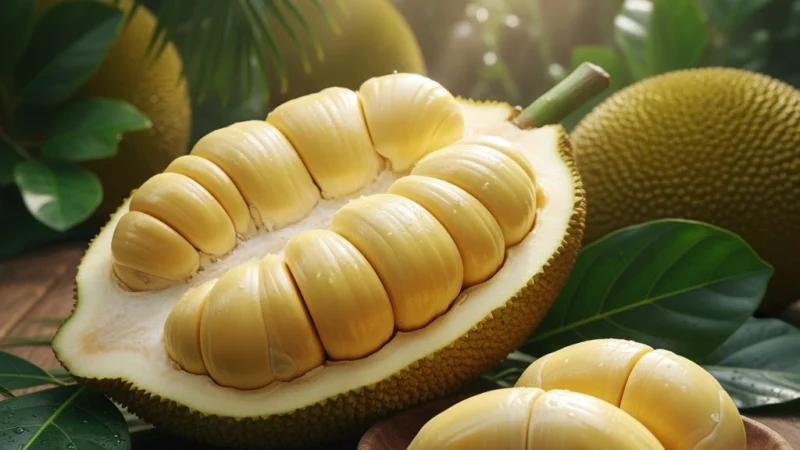
Nangka is known as the largest tree-borne fruit in the world, ranging from 5 kg to 25 kg. Its exterior is green to yellowish-green with robust, blunt spikes. As the fruit ripens, the skin becomes slightly golden and emits a strong fruity aroma. Inside, nangka contains numerous golden-yellow arils wrapped around smooth brown seeds. The flesh may be firm and crunchy or soft and creamy depending on the variety.
Popular Varieties
| Variety | Local Name | Distinctive Features | Region of Prominence |
|---|---|---|---|
| Tekam Yellow | Nangka Tekam | Deep yellow, firm bulbs, aromatic | Pahang |
| Mastura | Nangka Mastura | Sweet, soft flesh, mild aroma | Johor |
| Lemak | Nangka Lemak | Rich, creamy flavour profile | Kedah & Perak |
| Mantin | Nangka Mantin | Large, crunchy arils | Negeri Sembilan |
| Honey Jackfruit | Nangka Madu | Extremely sweet, honey-like taste | Nationwide |
Preparation
- Fresh: Enjoyed raw as a sweet, juicy treat.
- Snacks: Jackfruit chips, fritters, dried slices, or candied nangka.
- Desserts: Serawa, kolak, ice creams, kuih, and pudding.
- Traditional Cuisine: Unripe nangka used in gulai, masak lemak, and village-style curries.
- Beverages: Smoothies, juices, milkshakes, and kombucha infusions.
Equipment
- Oiled knife to prevent sticking from latex
- Thick cutting board
- Gloves for safe handling
- Containers for separating bulbs and seeds
- Protective surface covering (banana leaf or paper)
Taste
Nangka offers a naturally sweet, tropical flavour with notes reminiscent of banana, mango, and pineapple. Premium varieties may present deeper honey-like undertones, complemented by gentle acidity for balance. Its depth of flavour supports usage in both traditional recipes and innovative culinary creations.
Texture
The texture can range from firm and crunchy to soft and custard-like depending on the type and ripeness. Unripe nangka is fibrous and meat-like, making it a widely adopted plant-based meat substitute in global vegan dishes.
Aroma
Nangka is well-known for its strong, sweet, and fruity aroma. Its fragrance is a signature characteristic that fills kitchens, markets, and roadside stalls, making it instantly recognisable.
Cultural Significance
In Malaysia, nangka holds deep cultural meaning. It is often served during Hari Raya celebrations, wedding feasts, and village gatherings. The fruit symbolises abundance, prosperity, and familial unity, reflecting its longstanding importance in Malay heritage. Its presence in both sweet treats and traditional savoury dishes reinforces its role in communal identity and culinary continuity.
Regional Cultivation
| State/Region | Famous For | Harvest Period |
|---|---|---|
| Pahang | Tekam Yellow & large orchards | June–August |
| Johor | Mastura variety | May–July |
| Kedah | Creamy Lemak variants | June–September |
| Perak | Traditional smallholder harvests | July–September |
| Terengganu | Heirloom varieties | June–August |
| Sabah & Sarawak | Wild and cultivated nangka | Year-round |
Social Context
Nangka is widely available in night markets, pasar tani, roadside stalls, and urban supermarkets. Malaysians enjoy it as post-meal treats, travel snacks, or festive delicacies. In rural areas, unripe nangka often features in community cooking events such as kenduri, reflecting its role in social cohesion. In cities, it has entered modern cafes and plant-based restaurants as a trendy ingredient.
Nutritional Information (per 100g)
| Nutrient | Amount |
|---|---|
| Calories | ~95 kcal |
| Carbohydrates | 23.5 g |
| Protein | 1.7 g |
| Fat | 0.6 g |
| Fiber | 1.5 g |
| Vitamins | Vitamins A, C, B-complex |
| Minerals | Potassium, Magnesium, Iron |
Health Benefits
- Rich in fibre for healthy digestion
- High in antioxidants that support immunity
- Natural energy source for active individuals
- Potassium content supports heart health
- Vitamin C contributes to skin wellness and collagen formation
Dietary Restrictions
- Moderation advised for diabetics due to natural sugars
- Individuals with latex sensitivity may react to nangka
- High fibre may cause discomfort when consumed excessively
- Unripe nangka dishes may not suit low-fibre diets
Allergens
- Latex-fruit syndrome
- Potential sensitivities linked to birch pollen or fig allergies
Cost
- Whole nangka: RM3 – RM6 per kg
- Premium honey varieties: RM6 – RM10 per kg
- Prepared arils: RM12 – RM20 per pack
Production & Export
Malaysia is a key producer of nangka within the ASEAN region, exporting fresh and processed jackfruit to Singapore, China, the Middle East, and emerging markets in Europe and North America. Unripe jackfruit’s rising role as a sustainable plant-based meat alternative has increased global demand. Its economic contribution extends through frozen products, canned nangka, ready-to-eat packs, and downstream processing — positioning the fruit as a high-value agricultural commodity for Malaysia’s food industry.
Symbolism
Nangka represents prosperity, unity, and abundance, qualities often associated with its numerous edible bulbs. As both a traditional icon and a modern culinary asset, the fruit embodies Malaysia’s heritage while supporting its evolving identity in global gastronomy and sustainable food innovation.




Comments are closed.