
Kolo Mee

Malaysian Food
Kolo Mee
Origin
Sarawak, Malaysia (particularly Kuching)
Category
Noodle dish / Breakfast & Lunch staple
Appearance
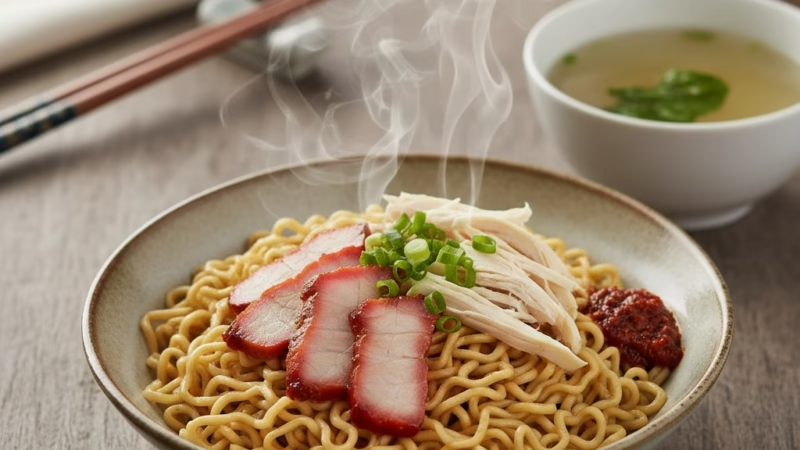
Springy, yellow egg noodles, often tossed in light soy sauce or sauce oil, garnished with minced pork, char siu, spring onions, and fried shallots
Ingredients
- Egg noodles
- Soy sauce or sauce oil
- Minced pork
- Char siu (optional)
- Garlic, shallots
- Spring onions
- Seasonings: salt, sugar, pepper, vinegar (optional)
Kolo Mee
Quick Cooking Timeline
- Boil noodles until al dente.
- Stir-fry garlic and shallots in oil.
- Toss noodles with soy sauce or sauce oil.
- Top with minced pork, sliced char siu, and garnishes.
Preparation
- Boil noodles until al dente.
- Stir-fry garlic and shallots in oil.
- Toss noodles with soy sauce or sauce oil.
- Top with minced pork, sliced char siu, and garnishes.
Equipment
- Wok or frying pan
- Pot for boiling noodles
- Strainer or colander
- Mixing spoon or tongs
Variations
- Dry Kolo Mee (no soup)
- Soup Kolo Mee (served in clear broth)
- Vegetarian versions using mushrooms or tofu
Taste
Savory with subtle sweetness; slightly smoky if char siu is used
Texture
Springy noodles with tender toppings; slight crunch from fried shallots
Aroma
Aromatic from garlic, shallots, and lightly seasoned pork
Sound
Soft slurping when eaten, with occasional crunch from fried shallots
Cultural Significance
A signature Sarawakian dish representing the local Chinese culinary influence
Symbolism
Comfort food connecting generations; commonly eaten as breakfast or casual lunch
Regional Cuisine
Sarawak (Kuching); also found in Malaysian and Singaporean Chinese communities
Social Context
Popular with locals and tourists; commonly eaten at hawker stalls or kopitiams
Nutritional Information
- High in carbohydrates (noodles)
- Moderate protein (pork and egg)
- Fat content varies depending on oil used
Health Benefits
Provides energy and protein; can be made lighter with lean meats and minimal oil
Dietary Restrictions
- Not halal if using pork
- Contains gluten (wheat noodles)
- Not suitable for vegetarian or vegan unless modified
Allergens
Egg, wheat, soy, possibly sesame oil
Cost
RM5–RM10 per serving in Malaysia
Production
Handmade noodles preferred for traditional texture; commercial noodles also used
Sustainability
Depends on meat sourcing; vegetarian versions are more sustainable
Availability
Widely available in Sarawak, especially Kuching; specialty stalls in Peninsular Malaysia and Singapore
History
Originated from Chinese immigrants in Sarawak; has evolved into a signature local dish
Anecdotes
Often compared to Penang Wantan Mee, but distinguished by lighter seasoning and springier noodles
How to Prepare
- Boil egg noodles until al dente.
- Stir-fry minced pork with garlic and soy sauce.
- Toss noodles with sauce, top with pork, char siu, spring onions, and fried shallots.
- Serve hot
FAQ
Q: Can Kolo Mee be vegetarian?
A: Yes, use mushrooms, tofu, or plant-based protein and vegetarian sauces.
Q: What makes Kolo Mee unique?
A: Its light, dry seasoning, springy noodles, and subtle pork aroma set it apart from richer noodle dishes.


Comments are closed.