

Istana Negara

Synopsis
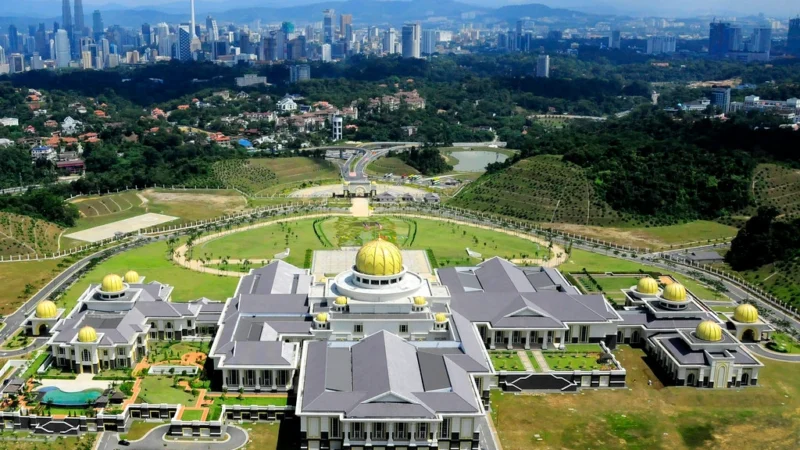
Istana Negara, located in the heart of Kuala Lumpur, stands as a majestic symbol of Malaysia’s constitutional monarchy. Serving as the official residence of the Yang di-Pertuan Agong (King of Malaysia), this architectural marvel represents both national pride and regal heritage.
Overview
Completed in 2011, the new Istana Negara replaced the old palace on Jalan Istana to accommodate the evolving ceremonial and administrative functions of Malaysia’s monarchy. Situated along Jalan Tuanku Abdul Halim, the palace spans over 97 hectares of landscaped grounds and serves as a prominent landmark showcasing the fusion of Malay and Islamic architecture.
As the official royal residence, the palace hosts key national events, royal audiences, and official state functions, making it one of the most important buildings in the country’s governance and cultural identity.
Palace Quick Facts
- Location: Jalan Tuanku Abdul Halim, Kuala Lumpur, Malaysia
- Established: 2011
- Function: Official residence of the Yang di-Pertuan Agong (King of Malaysia)
- Architectural Style: Islamic and Malay traditional design
- Area: Approximately 97 hectares
- Public Access: Restricted; visitors may view from the Main Gate and Royal Guard Post
History
The decision to build a new Istana Negara was made in 2007 to replace the aging old palace. Construction began soon after and was completed in 2011, just in time for the installation of Malaysia’s 14th King. The palace’s design reflects Malaysia’s royal traditions and incorporates intricate motifs inspired by Islamic art and Malay culture.
While the interior remains closed to the public, the exterior grandeur and ceremonial guard changes attract thousands of visitors annually.
Architectural Highlights
The palace features:
- 22 domes covered in gold-colored tiles symbolizing royal sovereignty.
- A Main Throne Hall used for coronation ceremonies and royal audiences.
- Separate administrative, residential, and ceremonial wings.
- Royal Guard Pavilions where visitors can witness the Changing of the Guard ceremony, similar to Buckingham Palace traditions.
- Beautiful landscaped gardens and ornate Islamic-inspired patterns adorning the exterior walls and gates.
Legends & Symbolism
The Istana Negara embodies Malay royal symbolism, with design elements reflecting purity, strength, and divinity. The golden domes represent wisdom and prosperity, while the palace’s elevated setting on a hill symbolizes authority and protection over the land.
Visiting Information
Though the palace interior is not open to visitors, the main gate area is a popular tourist spot. The Changing of the Guard ceremony occurs daily and offers an excellent photo opportunity. Visitors can also enjoy scenic views of the palace grounds and appreciate its architectural beauty from designated viewing areas.
Things to Do
- Watch the Changing of the Guard ceremony
- Take photos at the Royal Gates
- Visit the old Istana Negara Museum on Jalan Istana to learn about Malaysia’s royal history
- Enjoy panoramic views of the city’s royal district
Nearby Attractions
- Perdana Botanical Gardens – Lush green park ideal for walks and picnics
- National Mosque (Masjid Negara) – Iconic Islamic architecture and cultural site
- Islamic Arts Museum Malaysia – Showcasing Islamic heritage and art from around the world
- Merdeka Square – Historic site where Malaysia declared independence
How to Reach Istana Negara
- By Car: Easily accessible via Jalan Tuanku Abdul Halim and Jalan Duta.
- By Public Transport: Nearest MRT/LRT stations include Semantan MRT or Kuala Lumpur Sentral, followed by a short taxi ride.
- By Tour Bus: Included in most Kuala Lumpur city sightseeing tours.
Frequently Asked Questions (FAQ)
Q1: Can visitors enter Istana Negara?
A: No, the palace is not open to the public, but visitors can view and take photos from the main gate area.
Q2: When is the best time to visit?
A: Morning or late afternoon, especially during the Changing of the Guard ceremony.
Q3: Is there an entrance fee?
A: No, viewing from the outside is free of charge.
Q4: Is the old Istana Negara still open?
A: Yes, it has been converted into a Royal Museum (Muzium Diraja) showcasing the former royal residence and its history.





Comments are closed.