

How to Discover Malaysia’s Maritime Heritage

Introduction
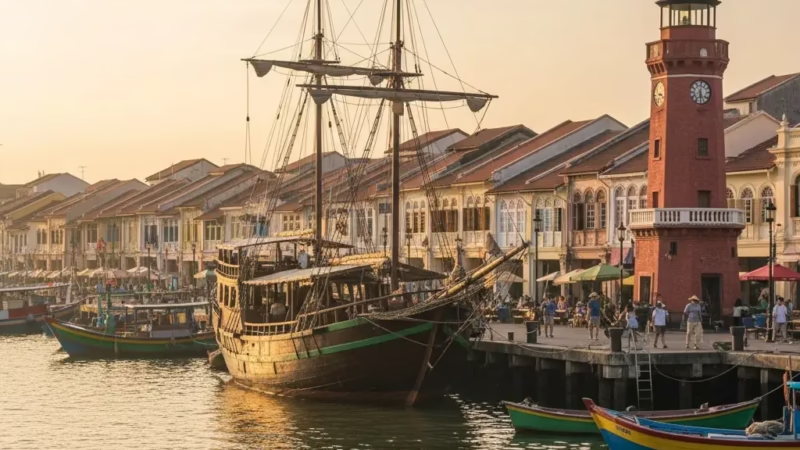
Malaysia’s maritime heritage is a fascinating journey into its seafaring past — from ancient trade routes and shipbuilding craftsmanship to museums and coastal settlements that tell stories of cultural exchange. Exploring this heritage helps travelers understand Malaysia’s identity as a maritime crossroads of Asia. In this guide, you’ll learn how to experience Malaysia’s maritime legacy through ports, museums, festivals, and living traditions that continue to shape the nation’s coastal culture.
Step 1: Start with Malaysia’s Maritime Museums
Begin your exploration at the country’s key maritime museums that showcase centuries of seafaring history.
Visit the Maritime Museum in Melaka, shaped like the Portuguese Flor de la Mar ship, and the Royal Malaysian Navy Museum in Lumut, Perak. In Sabah, the Sandakan Heritage Museum highlights Borneo’s maritime trade.
Tip: Most museums have interactive displays and models that make learning more engaging for families and history enthusiasts.
Step 2: Explore Historical Ports and Trading Towns
Malaysia’s coastal towns were once vital trade hubs connecting Asia, the Middle East, and Europe.
Wander through Melaka, a UNESCO World Heritage site that thrived as a major port in the 15th century, or George Town, Penang, where colonial-era warehouses and jetties reflect multicultural trade.
Tip: Take a heritage walking tour to see restored waterfronts and hear local tales of sailors and merchants.
Step 3: Visit Traditional Boatbuilding Villages
To witness living heritage, explore the artisanal boatbuilding centers that preserve age-old craftsmanship.
Head to Pulau Duyong in Terengganu, famed for building traditional Malay sailing boats, or Kota Belud in Sabah, known for wooden fishing vessels.
Why it matters: These villages offer insight into how maritime skills are passed down generations — a true window into Malaysia’s coastal culture.
Step 4: Experience Maritime Festivals and Regattas
Join Malaysia’s vibrant maritime celebrations to feel the seafaring spirit firsthand.
The Langkawi International Maritime and Aerospace Exhibition (LIMA) combines maritime technology and naval displays, while the Sabah Dragon Boat Festival brings colorful racing traditions to life.
Tip: Check local event calendars before your visit — many coastal towns host annual regattas and sea-centric cultural events.
Step 5: Discover Coastal Forts and Lighthouses
Malaysia’s coasts are dotted with historical landmarks that once guided and protected ships.
Explore Fort Cornwallis in Penang, A Famosa in Melaka, or the Cape Rachado Lighthouse in Negeri Sembilan — one of the oldest lighthouses in the region.
Tip: Sunset visits offer stunning photo opportunities with panoramic sea views.
Step 6: Dive into Maritime Nature and Ecology
Experience Malaysia’s marine ecosystem — the living part of its maritime heritage.
Snorkel or dive in Pulau Redang, Pulau Tioman, or Sipadan Island to explore coral reefs that once served as navigation markers for sailors.
Why it matters: Protecting these waters helps preserve the same marine routes that shaped Malaysia’s cultural and economic identity.
FAQs
1. What is Malaysia’s maritime heritage?
It refers to the historical, cultural, and economic legacy of Malaysia’s relationship with the sea — including trade, navigation, shipbuilding, and coastal traditions.
2. Where can I best experience maritime history in Malaysia?
Melaka, Penang, Terengganu, and Sabah are top destinations with museums, ports, and maritime festivals.
3. Is it possible to see traditional boats still in use?
Yes, especially in Terengganu and Sabah, where craftsmen continue to build and sail traditional wooden boats.
Conclusion
Exploring Malaysia’s maritime heritage is like sailing through time — from ancient ports to vibrant coastal villages that still echo with the rhythm of the sea. Each museum, lighthouse, and regatta reveals another layer of the nation’s deep connection with the ocean. Start your maritime journey today and discover how Malaysia’s seas continue to inspire its people and culture.





Comments are closed.