
Guangzhou Baiyun International Airport

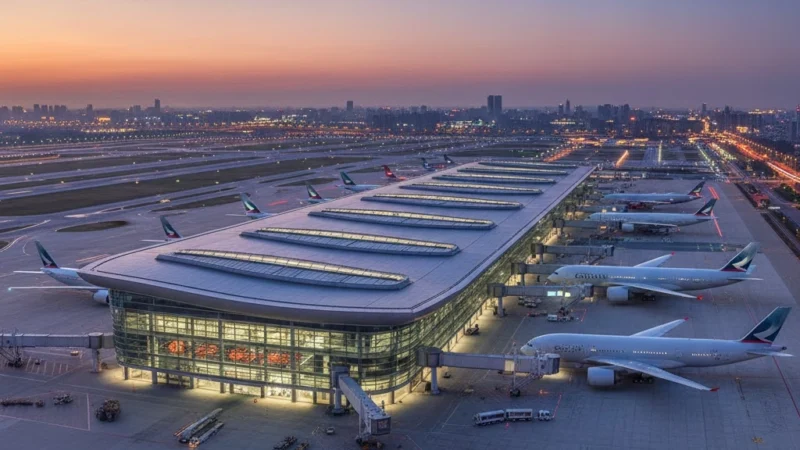
Guangzhou Baiyun International Airport (IATA: CAN, ICAO: ZGGG) is the main international airport serving Guangzhou, the capital of Guangdong Province in southern China. As one of the country’s busiest and most important aviation hubs, the airport plays a crucial role in connecting China with major regions across Asia, Europe, the Middle East, Oceania, and North America. It is operated by Guangzhou Baiyun International Airport Co., Ltd. and functions as the primary hub for China Southern Airlines, as well as a key base for numerous domestic and international carriers.
Located around 28 kilometers north of Guangzhou city center, the airport is known for its modern infrastructure, wide route network, and excellent passenger services. It serves millions of passengers annually and is an important gateway for the Guangdong–Hong Kong–Macau Greater Bay Area.
History
The current Guangzhou Baiyun International Airport commenced operations on 5 August 2004, replacing the older Baiyun Airport, which had become insufficient for the region’s growing aviation needs. Designed as a modern mega-hub, the new airport was built with substantial expansion capacity.
Major developments include:
- 2004: New airport officially opened.
- 2013: Construction of Terminal 2 began to support rising international traffic.
- 2018: Opening of Terminal 2, making CAN one of the largest airports in China.
- 2020–present: Ongoing expansions to support cargo growth, transit enhancements, and improved connectivity to Greater Bay Area cities.
Today, the airport continues to develop with long-term plans for additional runways and terminal complexes.
Terminals
Guangzhou Baiyun International Airport features two major passenger terminals, both designed to handle high passenger volumes efficiently.
Terminal 1
- Serves a mix of domestic and international airlines.
- Offers extensive retail, dining, and passenger services.
- Connected to Terminal 2 via an internal transportation system.
Terminal 2
- Main base for China Southern Airlines and SkyTeam partners.
- Includes advanced check-in halls, automated immigration facilities, and large transfer zones.
- Known for premium lounges and modern architectural design.
Common Facilities
- Free Wi-Fi throughout the airport
- Duty-free shops and luxury brand outlets
- Currency exchange, banks, and ATMs
- VIP lounges and business centers
- Prayer rooms, children’s play areas, medical clinics
- Luggage storage and porter services
Runways
The airport operates three parallel runways, enabling high-capacity flight operations:
- Runway 01/19
- Runway 02L/20R
- Runway 02R/20L
These runways support large wide-body aircraft and long-haul international flights.
Airlines and Destinations
Guangzhou Baiyun International Airport is one of China’s most internationally connected airports.
Major Airlines
- China Southern Airlines
- Air China
- China Eastern Airlines
- Hainan Airlines
- XiamenAir
- Cathay Pacific
- Emirates
- Qatar Airways
- Singapore Airlines
- Malaysia Airlines
- Lufthansa
- Turkish Airlines
- Scoot
- Thai Airways
Key Destinations
- Asia: Hong Kong, Singapore, Kuala Lumpur, Bangkok, Tokyo, Seoul, Jakarta
- Europe: London, Paris, Frankfurt, Amsterdam, Istanbul
- Oceania: Sydney, Melbourne, Auckland
- North America: Vancouver, Los Angeles
- Middle East: Dubai, Doha
(Actual destinations may vary by season.)
Passenger Services
Lounges
- China Southern Sky Pearl Lounge
- Air China VIP Lounge
- Plaza Premium Lounge
Food & Beverage
- Cantonese specialty restaurants
- International cuisine
- Coffee shops and fast-food outlets
Shopping
- Duty-free shops
- Designer fashion boutiques
- Electronics, souvenirs, and lifestyle stores
Additional Services
- Airport hotel (Aerotel)
- Massage and relaxation centers
- Charging stations
- Smart kiosks for self-check-in
Ground Transportation
Guangzhou Baiyun International Airport is connected to the city through multiple transportation modes.
1. Metro
- Guangzhou Metro Line 3 connects both terminals to key areas in Guangzhou.
- Stations: Airport South (T1) and Airport North (T2).
2. Airport Shuttle Buses
Routes available to:
- Guangzhou city center
- Shenzhen
- Foshan
- Dongguan
- Zhuhai
- Zhongshan
- Huizhou
3. Taxis & Ride-Hailing
- Available 24/7 from official taxi stands
- Digital ride-hailing such as Didi widely used
4. Private Vehicles
- Multi-level parking facilities
- Short-term and long-term parking
- Car rental services available on-site
5. Rail & Intercity Connectivity
- Integrated with future high-speed rail plans linking major Greater Bay Area cities.
- Buses operate regularly to major train stations including Guangzhou Railway Station and Guangzhou South Station.
Cargo Operations
Guangzhou is one of China’s key air cargo hubs, supporting:
- E-commerce shipments
- Express logistics
- International freight operations
The airport continues to expand its cargo terminals to meet growing global trade demand.
Future Plans
Major development plans include:
- Construction of Terminal 3
- Additional runways
- Enhanced transit and intercity rail systems
- Expansion of cargo handling capacity
- Greater integration into the Greater Bay Area transportation network
These upgrades aim to position the airport as one of Asia’s leading mega-hubs.
See Also
- China Southern Airlines
- Airports in China
- Transportation in the Greater Bay Area
Conclusion
Guangzhou Baiyun International Airport stands as a major international gateway for China, known for its modern terminals, extensive airline network, passenger-friendly services, and strategic importance in the Greater Bay Area. With its continuous development and future expansion plans, the airport is poised to remain one of Asia’s leading aviation hubs for decades to come.





Comments are closed.