

Driving East India Travel Ecosystems – KL–Kolkata Route Briefing

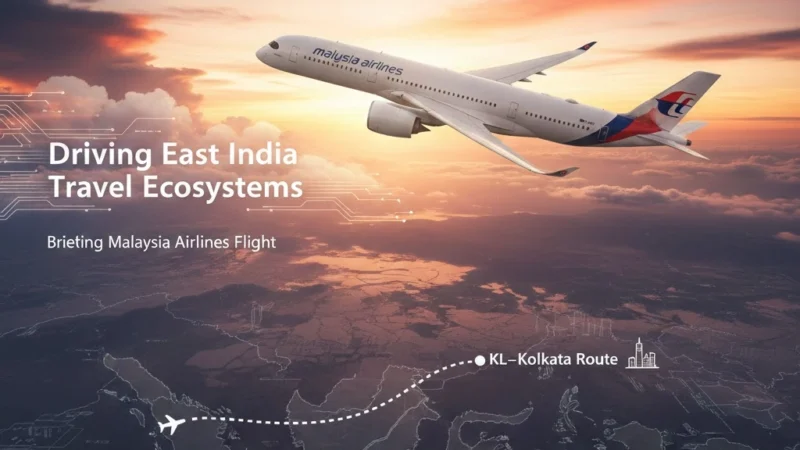
The Kuala Lumpur–Kolkata air corridor has become one of the most influential travel links connecting Southeast Asia with East India. This route supports high passenger volumes, two-way tourism growth, rising business mobility, and a strong student and medical travel segment. As Malaysia and India strengthen economic and cultural ties, the KL–Kolkata sector plays a central role in shaping the regional travel ecosystem.
Route Overview
Kolkata is the primary gateway to East and Northeast India, while Kuala Lumpur serves as a major aviation hub for Southeast Asia. The combination creates a high-demand corridor for leisure travellers, visiting families, students, business travellers, and transit passengers.
Quick Facts:
- Flight duration: approx. 3 hours 50 minutes
- Airlines: Malaysia Airlines, AirAsia, Batik Air Malaysia
- Passenger profiles: VFR, leisure tourists, business travellers, students, medical tourists
- Travel seasons: Durga Puja, Diwali, Christmas, New Year, Malaysian school holidays
The route benefits from Malaysia’s popularity among Indian travellers and Kolkata’s heritage, culture, and festival-driven tourism.
Demand Landscape and Travel Behaviour
The KL–Kolkata sector demonstrates strong and consistent demand throughout the year. Visiting Friends and Relatives (VFR) traffic forms a major segment, boosted by a sizeable Bengali community living in Malaysia and neighbouring Singapore. Festival seasons like Durga Puja and Diwali create sharp peak travel periods, with flights filling up weeks in advance.
Malaysia continues to attract East Indian travellers for family vacations, theme park holidays, city breaks, and medical tourism. Kuala Lumpur, Langkawi, Penang, Genting Highlands, and Melaka remain the most visited destinations for travellers from Kolkata and surrounding states.
Business and SME travel is also on the rise, thanks to Kolkata’s expanding IT, textile, retail, and trading sectors. Malaysia’s connectivity to ASEAN, Japan, Korea, and Australia via KLIA makes Kuala Lumpur a preferred transit gateway for corporate passengers.
The student segment is another growth driver, as Malaysian universities offer competitive programs in aviation, hospitality, business, engineering, and IT. Many Kolkata- and Odisha-based students use this route for education-related travel.
Airline Performance and Operational Insights
The KL–Kolkata sector maintains strong average load factors ranging between 80% and 92%, making it one of the more stable India–Malaysia routes. Daily or near-daily frequencies by multiple carriers ensure flexibility for passengers and support transit connectivity across Asia-Pacific and the Middle East.
The presence of both low-cost and full-service carriers keeps fares competitive and attractive. Full-service carriers draw passengers seeking comfort, baggage inclusion, and seamless onward connections, while low-cost carriers appeal to price-sensitive leisure and VFR travellers.
KLIA’s extensive network enables convenient transits to destinations like Singapore, Bali, Tokyo, Seoul, Sydney, Melbourne, Dubai, and Jeddah. This enhances Kuala Lumpur’s role as a major hub for East India outbound traffic.
Impact on Tourism and Regional Mobility
The route plays a key role in boosting tourism for both Malaysia and Eastern India. Indian travellers visit Malaysia for nature experiences, city attractions, beaches, theme parks, and shopping. Malaysian travellers explore Kolkata’s cultural heritage, colonial landmarks, spiritual sites, and major attractions such as the Sunderbans, Darjeeling, Kalimpong, and Puri.
The KL–Kolkata route also supports significant trade movement. Kolkata is a major exporting region for tea, textiles, leather goods, handicrafts, pharmaceuticals, and engineering goods—creating steady belly-hold cargo potential for airlines.
This route also benefits passengers from neighbouring regions such as Odisha, Bihar, Jharkhand, Assam, and even Bangladesh, thanks to Kolkata’s strong regional connectivity.
Ticket Prices and Fare Details
Typical one-way fare range:
- AirAsia (Low-cost): RM 350 – RM 850
- Malaysia Airlines / Batik Air (Full-service): RM 700 – RM 1,500
- Festival or holiday surge: 20–40% increase
Low-cost fare categories usually exclude baggage, meals, and seat selection (available as add-ons), while full-service fares include checked baggage and onboard meals. For best pricing, travellers are recommended to book their KL–Kolkata tickets 40–60 days before departure.
Frequently Asked Questions (FAQ)
How long is the KL–Kolkata flight?
Approximately 3 hours 50 minutes nonstop.
Which airlines operate Kuala Lumpur to Kolkata flights?
Malaysia Airlines, AirAsia, and Batik Air Malaysia.
What is the best time to travel from KL to Kolkata?
October to March offers pleasant weather and vibrant festivals.
Is Kuala Lumpur a good transit hub for flights from Kolkata?
Yes, KLIA connects smoothly to Southeast Asia, East Asia, Australia, and the Middle East.
How early should KL–Kolkata flights be booked for best fares?
40–60 days in advance is ideal.

 30°C
30°C
- Temperature
- Precipitation
- Rain Chance
- Wind
- Humidity
- Pressure


Conclusion
The KL–Kolkata route is a high-performing aviation corridor that drives tourism, diaspora travel, student mobility, business movement, and regional connectivity between Malaysia and East India. With robust demand, strong load factors, and excellent transit offerings through KLIA, this sector is positioned for sustained growth. Continued airline investments, seasonal capacity adjustments, and targeted marketing within East India can further unlock the route’s strategic potential.












Comments are closed.